

In case you use laminate flooring in your house, you are likely to be enjoying its quality and the graceful look. However, to maintain those floors presentable, they need proper care and maintenance. It does not matter whether you are having daily dirt or a tough-to-clean spot, this all-in-one guide will tell you how to clean laminate floors properly, without leaving any place unclean.
Understanding Your Laminate Floors
It is necessary to comprehend what is special about laminate flooring before we get down to the cleaning process. Laminate is not hardwood or tile, it is composed of many layers glued together, the top layer is a protective wear layer and the bottom layer is a photographic layer that makes it look like timber or stone. This construction contributes to the durability and affordability of laminate, however, it also implies that one should be careful of the cleaning tools.
The main point to keep in mind is that the laminate floors are not waterproof. Although they can be waterproof to a certain extent, too much water can creep into the joints and result in swelling, warping or even mould. This is why the correct cleaning methods are quite mandatory in keeping your floors in an extended period of time.
What You’ll Need
Before you start, gather these supplies:
- A soft-bristle broom or dust mop
- Microfibre mop or cloth
- Vacuum cleaner with a hard floor attachment (no beater bar)
- Two buckets
- Warm water
- pH-neutral laminate floor cleaner (or make your own with vinegar)
- Spray bottle
- Soft, dry towels
Daily Maintenance: Keeping It Simple
Light cleaning every now and then is the most effective way of maintaining your laminate floors to shine. Sweep or vacuum your floors, every day or on a few occasions a week. This eliminates dirt, dust and debris that may scratch the surface in the long run. The reason is to imagine that you are washing your car every now and then so that you do not see dirt accumulating and ruining the paint.
When vacuum cleaning, ensure that you are on the hard floor-setting, and beater bars are off. Actually the rotating brushes may scratch the laminate surfaces hence the last thing you want to do. Simple sweeping with a soft-bristle broom will do equally well and will require hardly any time at all.
Step-by-Step: How to Clean Laminate Floors Properly
Now let’s get into the proper deep cleaning process. Follow these steps to ensure your floors stay in top condition:
Step 1: Clear the Area
Begin by clearing the floor of furniture, carpets or any obstacles there may be. This will provide you with full access to the whole surface and you will not miss any spots. Unless you can move large pieces of furniture, then you should do what you can to clean around them, and attempt to move them at least every now and then to enable cleaning under them.
Step 2: Sweep or Vacuum Thoroughly
Vacuum or sweep the whole floor to get all the loose dirt and debris off the floor. Look particularly at corners, edges of the under furniture, and along the skirting boards where dust is apt to be found. This will be an important step as you do not want to be cleaning up dirt as you proceed with the mopping process.
Step 3: Prepare Your Cleaning Solution
This is where it would be of great importance to know how to take proper care of laminate floors. Put a little pH-neutral laminate floor cleaner in one of the buckets with clean warm water. Take the dilution ratios as per the manufacturer. In case you want to make it yourself, combine one cup of white vinegar with four litres of warm water. Vinegar is a genius in removing dirt without any traces.
Only fill your second bucket with clean water. This will be to wash your mop before contaminating your clean floors with dirty water.
Step 4: Mop with Minimal Water
This is the golden rule of cleaning the laminate floors: do not use more water than necessary. Wet your microfibre mop in the cleaning solution, and squeeze it until it is barely wet. You do not want the mop to be too wet such that it leaves standing water on the floor.
Also mop the floorboards, in small sections. This technique will be sure that you will be working along the grain of the laminate pattern and prevent streaking. Clean the section and then rinse your mop in the clean water bucket, wring it dry and then wet once more with the cleaning solution and then continue.
Step 5: Tackle Stubborn Spots
On the sticky spots or the stubborn marks, use a small amount of cleaning solution by spraying it over the area of concern. Wait a minute and allow it to loosen up the dirt and then wipe it smoothly with a wet microfibre cloth. Do not scrub vigorously using abrasive pads or steel wool as it will cut the protective layer.
When dealing with really difficult marks such as shoe scuff marks rub them with a pencil eraser or a small piece of baking soda on a damp towel. Such tricks are soft enough not to hurt the surface but strong enough to remove the majority of marks.
Step 6: Dry the Floor
This step is absolutely crucial when learning how to clean laminate floors. Even though you’ve used minimal water, you should still dry the floor with clean, soft towels. This prevents any moisture from sitting on the surface or seeping into the seams. Simply walk over the floor with dry towels under your feet, or use a dry mop to absorb any remaining moisture.
What to Avoid When Cleaning Laminate Floors
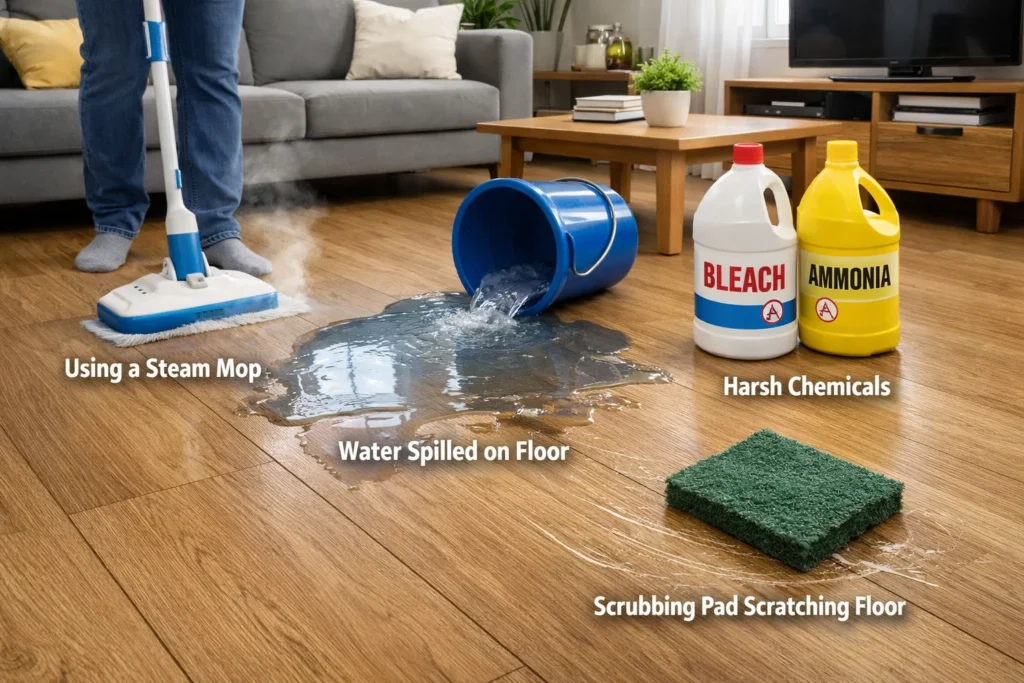
It is also important to know what not to do instead of knowing the appropriate techniques. The following are some of the errors that tend to spoil your laminate:
Do not use steam mops or excessive water, as the combination of heat and moisture can cause warping and peeling of the laminate along the seams—something any professional cleaning service would strongly advise against. Avoid harsh chemicals such as bleach, ammonia, or abrasive cleaners, as these can strip the protective coating and dull the finish. Never apply wax or polish designed for hardwood floors; laminate does not require waxing, and such products only leave a sticky residue that attracts more dirt.
Keep off sharp scrubbing pads as they will impale the surface. And never have spills lie on the floor. The faster they are washed, the more likely that they will not be damaged by moisture or stained.
Preventing Damage and Maintaining Your Floors
In addition to your daily cleaning, you can guard your laminate floors and make them look new in a number of ways:
Put doormats over all doors to ensure that any dirt and water coming in is caught before it is carried into your floors. Place padding legs on furniture to avoid scratches on furniture during mobility. Keep the nails of pets short to prevent them scratching their nails. Wipe any spills off with a dry or slightly wet cloth. Grant area carpets in busy areas to lessen wear and tear.
Keep the humidity of your house at a steady level, preferably 35 percent to 65 percent. This stops the laminate expanding or contracting too much and therefore leaving gaps or buckling.
Dealing with Specific Stains
Various stains need varying techniques. In case of grease or oil stains, drop of dishwashing liquid combined with warm water should be used. With ink or markers, rubbing alcohol on a cloth should work. Stains on blood can be removed using a cloth soaked in window cleaner. The vinegar solution is brilliant with wine or juice stains.
Ice pack can be used to harden chewing gum and wax and scraped off using plastic scraper. When trying any cleaning process always first in a very inconspicuous position to make sure that the cleaning process will not destroy or discolour your particular laminate finish.
Seasonal Deep Cleaning
While regular maintenance keeps your floors looking good daily, consider doing a more thorough clean every few months. Move all furniture to clean underneath, pay extra attention to baseboards and corners, and inspect for any damage that might need repair. This is also a good time to assess whether your cleaning routine needs any adjustments.
When Professional Help Makes Sense
There are times when even with the best efforts, floors require professional work. Should you have a big watering and you cannot get the stains to go away, the experts should be called in to save you time and even lose you a lot of money in case you should do it in the future.
Laminate floors have special equipment and products that are used by professional cleaners. They are able to handle the issues which appear to be impossible to the normal homeowner and they are able to repair floors that may appear hopeless.
Your Trusted Cleaning Partner
When you have discovered that the process of cleaning your laminate floors is occupying too much of your precious time, or when you are currently involved with some tough nuts that require the services of an expert, Bearaux Cleaning can assist you. Our professional crew has an insight into how they should wash laminate floors, they use the correct procedures and cleaners to ensure that your floors are in the best condition possible and any chances of damage are eliminated. We are ready to do all types of regular service and even deep cleaning, which will save you weekends and make your house look clean throughout the year.
Final Thoughts
It is not rocket science to learn how to clean laminate floors; however, paying attention to details and using the right techniques makes all the difference. By following a regular cleaning routine—similar to the methods used in Deep Cleaning in Melbourne you can preserve the beauty of your floors for years to come. The key is to use minimal moisture, avoid harsh cleaners, and address spills or stains immediately. With these simple habits, your laminate flooring will remain a durable, attractive, and practical part of your home.
FAQs
1. Why can’t I use excessive water on laminate floors?
Laminate floors aren’t waterproof, only water-resistant to some degree. Excessive moisture can seep into the seams and cause swelling, warping, or even mould growth, which can permanently damage your flooring. This is why proper cleaning techniques with minimal water are essential for maintaining your floors over the long haul.
2. Can I use a steam mop on laminate flooring?
No, you should never use steam mops on laminate floors. The combination of heat and moisture can cause the laminate to warp and separate at the seams, leading to permanent damage. Stick to a barely damp microfibre mop for safe and effective cleaning.
3. How often should I clean my laminate floors?
For daily maintenance, sweep or vacuum a few times a week to remove dirt and debris that can scratch the surface. Deep cleaning with a damp mop should be done as needed, typically once a week or every two weeks depending on foot traffic. Consider a more thorough seasonal deep clean every few months.
4. What’s the best cleaning solution for laminate floors?
Use a pH-neutral laminate floor cleaner following the manufacturer’s dilution instructions, or make your own DIY solution by mixing one cup of white vinegar with four litres of warm water. Vinegar is excellent for cutting through grime without leaving residue and is safe for laminate surfaces when used properly.
5. How do I remove scuff marks from laminate floors?
For scuff marks from shoes, try rubbing them gently with a pencil eraser or a bit of baking soda on a damp cloth. These methods are gentle enough not to damage the protective layer but effective enough to lift most marks. Never use abrasive pads or steel wool as these will scratch the surface.
6. Should I wax or polish my laminate floors?
No, laminate flooring doesn’t need waxing or polishing. Products designed for hardwood floors will only leave a sticky residue on laminate that attracts more dirt and can dull the finish. The protective wear layer on laminate is designed to maintain its shine without additional treatments.
7. What type of vacuum attachment should I use?
Use a vacuum cleaner with a hard floor attachment and ensure any beater bars are turned off. Rotating brushes can actually scratch laminate surfaces, causing damage over time. A soft-bristle broom works equally well and is a safe alternative for daily maintenance.
8. How do I properly dry laminate floors after mopping?
After mopping with a barely damp mop, dry the floor immediately with clean, soft towels to prevent any moisture from sitting on the surface or seeping into the seams. You can walk over the floor with dry towels under your feet or use a dry mop to absorb any remaining moisture.
9. What should I do if I spill something on laminate floors?
Clean up spills immediately with a dry or barely damp cloth to prevent moisture damage or staining. The quicker you address spills, the less chance there is of the liquid seeping into the seams. Different stains may require specific treatments, such as dishwashing liquid for grease or rubbing alcohol for ink.
10. How can I prevent scratches on my laminate flooring?
Place doormats at all entrances to trap dirt before it gets tracked onto your floors, and use felt pads under furniture legs to prevent scratches when moving items. Keep pets’ nails trimmed, consider area rugs in high-traffic zones, and sweep or vacuum regularly to remove abrasive dirt and debris.