
Have you ever asked yourself, how do professional window cleaners obtain such brilliant outcomes? It is not only technique, but more oftentimes it is about the proper cleaning solution. Knowing how to prepare windows cleaning solutions at home will save you money and provide the results of a quality of a professional. I will provide you with the recipes that have worked, tips that have been passed down by experts, and all the things you need to know about making efficient window cleaners out of the items that are usually available in the house.
Why Make Your Own Window Cleaning Solution?
There are several reasons why it makes sense to create your own window cleaning solution before diving into the recipes. Commercial cleaners often contain harsh chemicals, cost more over time, and rely on plastic packaging that harms the environment. By making your own solution, you gain full control over the ingredients, keeping your family and pets safe while reducing your environmental footprint. These eco-friendly practices also complement professional deep cleaning in Melbourne when a more thorough, intensive clean is required.
The Science Behind Effective Window Cleaners
It is when you know what makes windows clean that you are able to develop better solutions. The dirt, grease, and grime attach to glass by a number of bonds. To be an effective cleaner, one must sever these relationships, dissolve the deposits, and dry in a few seconds without leaving a streak. The truly remarkable ingredients that achieve this are incredibly simple, water, alcohol or vinegar to remove grease and occasionally a bit of dish soap to remove an unwanted dirt.
Essential Ingredients for Window Cleaning Solutions
Here’s what you’ll typically need when learning how to make window cleaning solution:
Common Ingredients and Their Purposes
| Ingredient | Purpose | Benefits |
| Distilled Water | Base liquid | Prevents mineral deposits and streaking |
| White Vinegar | Cuts through grease and grime | Natural, inexpensive, antibacterial |
| Rubbing Alcohol | Quick evaporation, streak-free finish | Effective on tough residue |
| Dish Soap | Breaks down oils and dirt | Gentle yet powerful cleaning |
| Essential Oils (optional) | Pleasant scent | Natural fragrance without chemicals |
Top 5 Window Cleaning Solution Recipes
1. Classic Vinegar Window Cleaner (Beginner-Friendly)
This homemade window cleaner is perfect for regular maintenance and light cleaning:
- 1 cup distilled water
- 1 cup white vinegar
- Optional: 5-10 drops of lemon essential oil
Mix all ingredients in a spray bottle. The vinegar smell dissipates quickly as it dries, leaving windows sparkling clean. This recipe works wonderfully for most household windows and mirrors.
2. Alcohol-Based Solution for Stubborn Grime
When you need extra cleaning power, this formula delivers:
- 1 cup distilled water
- 1 cup rubbing alcohol (70% isopropyl)
- 1 tablespoon white vinegar
This combination is excellent for removing fingerprints, grease, and outdoor grime. The alcohol ensures rapid drying without streaks, making it ideal for cold weather cleaning when water-based solutions might freeze.
3. Eco-Friendly Window Cleaner with Cornstarch
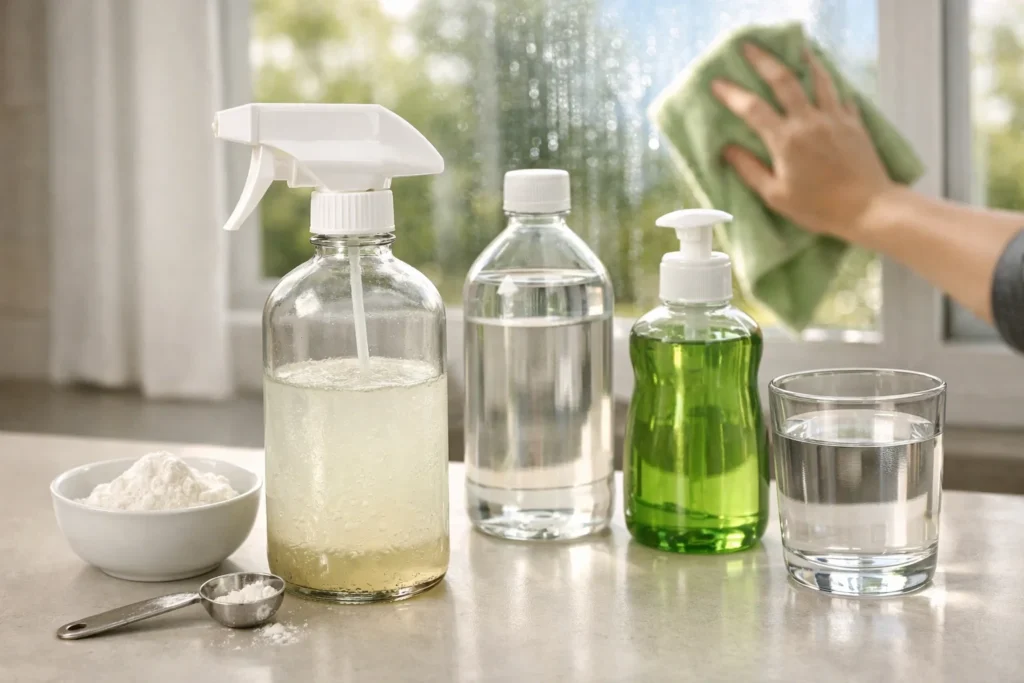
This surprising ingredient prevents streaking:
- 2 cups warm water
- 1/4 cup white vinegar
- 1/2 teaspoon liquid dish soap
- 2 tablespoons cornstarch
Shake well before each use. The cornstarch acts as a mild abrasive that helps remove stuck-on debris while preventing streaks. This eco-friendly window cleaner is biodegradable and safe for septic systems.
4. Heavy-Duty Outdoor Window Solution
For exterior windows that face weather, pollen, and pollution:
- 1 gallon warm water
- 1/2 cup white vinegar
- 1/4 cup rubbing alcohol
- 1 tablespoon dish soap
- 1 tablespoon lemon juice
This powerful blend tackles outdoor grime while the lemon juice adds extra grease-cutting power and a fresh scent.
5. Quick and Simple Two-Ingredient Formula
When you’re in a hurry:
- Equal parts water and white vinegar
That’s it! This minimalist approach proves you don’t need complicated formulas to get clean windows. It’s the recipe I reach for most often in my own home.
Step-by-Step Guide: How to Make Window Cleaning Solution
Let me walk you through creating your first batch:
- Choose Your Recipe: Start with the classic vinegar cleaner if you’re new to DIY cleaning solutions.
- Gather Supplies: You’ll need a clean spray bottle (preferably glass), measuring cups, and your chosen ingredients.
- Mix Carefully: Add ingredients to your spray bottle using a funnel to avoid spills. Always add liquids before any powders like cornstarch.
- Label Clearly: Write the recipe and date on the bottle. This helps you track what works best.
- Test First: Try your solution on a small, inconspicuous area before cleaning all windows.
Application Techniques for Best Results
Making the solution is only half the battle. Here’s how to use it effectively:
Start by removing loose dust with a dry microfiber cloth. Spray your cleaner onto the window (not directly onto newspaper or cloth, as you want even coverage). Wipe in a Z-pattern from top to bottom, then buff with a dry microfiber cloth or crumpled newspaper for a streak-free shine.
For best results, clean windows on cloudy days. Direct sunlight causes solutions to dry too quickly, leading to streaks.
Storage and Shelf Life
Solution Storage Guidelines
| Solution Type | Storage Location | Shelf Life | Notes |
| Vinegar-based | Room temperature | 6 months | Keep away from direct sunlight |
| Alcohol-based | Cool, dark place | 1 year | Ensure tight seal to prevent evaporation |
| Soap-containing | Room temperature | 3 months | Shake well before each use |
Always store your window cleaning solutions in closed containers away from children and pets. Glass bottles work best as they don’t interact with the ingredients and can be reused indefinitely.
Common Mistakes to Avoid
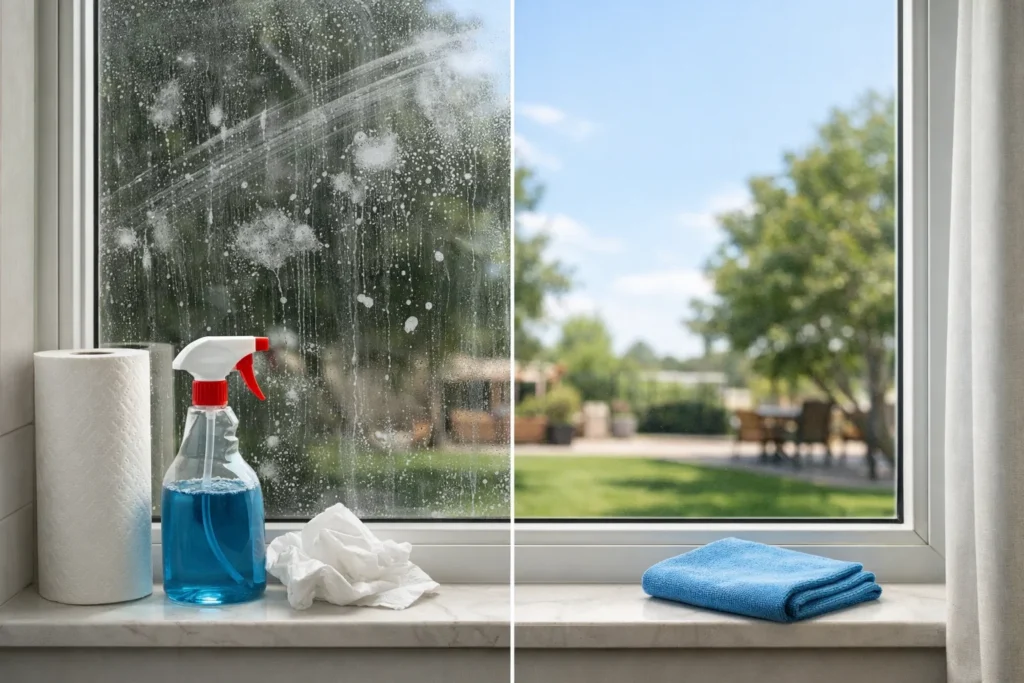
By trial and error, I have been able to understand what not to do. Do not add vinegar to ammonia–this forms dangerous fumes. Use of excess soap should be avoided resulting in streaking. Do not use tap water when yours is hard, minerals will leave marks. Avoid lotion or texture paper towels, which cause residue.
Environmental and Health Benefits
Producing your cleaner would severely decrease the plastic trash. The cost of most of the recipes per bottle amounts to less than one dollar as opposed to commercial products of 3-7. You will get rid of contact with chemical substances such as ammonia and dyes which are used as fragrances and which can cause allergy or breathing problems. In addition, these natural ingredients do not pose serious risks when sprayed accidentally in the food preparation centers.
Troubleshooting Tips
In case you have streaks, then you may be applying excessively much solution or cleaning in the direct sunlight. When trying to remove stubborn spots, leave the solution idle in 30 seconds and then wipe. When the windows appear to be cloudy upon cleaning wipe with a clean dry cloth; this is most likely a sign of a trace left by the earlier commercial cleaners which takes a few applications to be completely removed.
Final Thoughts
Knowing how to make an effective window cleaning solution allows you to keep your windows gleaming throughout the year without overspending or exposing your family to toxic substances. While DIY solutions are perfect for routine maintenance, situations such as end of lease cleaning in Melbourne often require professional expertise to achieve inspection-ready results and a truly spotless finish.
Begin with a single recipe that you like, and there is no reason to fear that you may change the proportions to suit your particular requirements. Your windows–and your wallet–will keep you in mind. Also, the true test of a good window cleaner is the one you will be using on a regular basis and therefore find an equation that fits in with your style of life and stick with it.
You are about to change your windows? Take that can of spray and put one of those recipes to the test today. You may be astonished to know the professional streak-free shine is very easy to do at home.
FAQs
1. What is the best homemade solution for cleaning windows?
The best homemade solution combines equal parts distilled water and white vinegar for everyday cleaning. For tougher grime, add one cup of rubbing alcohol to the mix for enhanced grease-cutting power. This simple recipe delivers streak-free results without harsh chemicals and costs less than a dollar per bottle.
2. Can I use dish soap in my window cleaning solution?
Yes, you can add a small amount of dish soap to your window cleaner, but use it sparingly. Add only 1/2 to 1 teaspoon per quart of solution, as too much soap creates streaks and residue. Dish soap is particularly helpful for cutting through stubborn grease on kitchen windows or outdoor glass.
3. How long does homemade window cleaner last?
Vinegar-based cleaners last approximately 6 months when stored properly in a cool, dark place. Alcohol-based solutions can last up to one year due to alcohol’s preservative properties. Solutions containing dish soap should be used within 3 months for best results and effectiveness.
4. Is vinegar safe for all types of windows?
Yes, vinegar is safe for standard glass windows, mirrors, and even tinted windows. However, avoid using vinegar on natural stone windowsills or frames as the acidity can damage marble, granite, or limestone. Always test on a small area first if you’re unsure about surrounding materials.
5. Why do my windows streak after cleaning?
Streaking typically occurs from using too much cleaning solution, cleaning in direct sunlight, or using dirty cloths. The solution dries too quickly in sunlight before you can wipe it properly, leaving residue behind. Use microfiber cloths, clean on cloudy days, and spray lightly for best streak-free results.
6. Can I add essential oils to my window cleaning solution?
Absolutely! Adding 5-10 drops of essential oils like lemon, lavender, or tea tree can provide pleasant fragrance and additional cleaning benefits. Essential oils are natural, won’t leave streaks, and help mask the vinegar smell if you find it unpleasant. They also add antibacterial properties to your cleaner.
7. What’s the difference between rubbing alcohol and vinegar?
Rubbing alcohol evaporates faster than vinegar, making it ideal for cold weather and preventing streaks on mirrors. Vinegar is better at cutting through mineral deposits and hard water stains due to its acidity. Many effective recipes combine both ingredients to leverage the benefits of each component.