
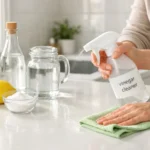
Cleaning vinegar has become a household follow-up of any person who wants to keep his house clean with natural and environmentally friendly products. It is an excellent substitute to harsh chemical cleaners and thus suitable to the families and pet owners as well as environment conscious people. This is a detailed guide on how you can make good use of cleaning vinegar in your house, and how to obtain it without any adverse effects on your health or safety.
What Makes Cleaning Vinegar Different?
It is worthy to know what makes cleaning vinegar different to ordinary white vinegar before immersing oneself into the applications. Cleaning vinegar usually has 6 percent acetic acid, as opposed to 5 percent of culinary vinegar. This additional 1 percent causes it to become nearly 20 percent stronger which gives it more cleaning power to handle hard labor type tasks in the home.
Safety Precautions Before You Start
Before using cleaning vinegar, it is always diluted, particularly when using it on sensitive surfaces. It should not be applied to natural stone countertops such as marble or granite because the acid may etch them. Do not combine vinegar and bleach, this will form chlorine gas, which is toxic. Where cleaning vinegar is applied, make sure that there is adequate ventilation by opening windows or exhaust fans.
How to Use Cleaning Vinegar in Every Room
Kitchen Applications
Cleaning vinegar is best in the kitchen. Combine equal parts water and cleaning vinegar in a spray bottle to have a universal cleaning solution that will remove grease, dirt, and food stains. Spray on top of countertops, stovetops, and appliances and wipe off using a microfiber cloth.
In the case of your coffee maker, add 1 cup of cleaning vinegar to 1 cup of water into the reservoir, then allow it to run through a brewing cycle, and then repeat two more full brews with pure water. This eliminates mineral formation and keeps your coffee fresh.
To clean you microwave, you put a bowl with one cup of water and two tablespoons of cleaning vinegar in it. Put it on high heat and leave after five minutes and wipe the interiors with a cloth. Sticky particles of food are detached by the steam.
Bathroom Cleaning Solutions
What can you wash with vinegar in the shower room? Nearly everything! Apply cleaning vinegar, which is undiluted, on shower doors, tiles, and fixtures to remove the soap scum and water spots. Allow 10-15 minutes then scrub and rinse well.
Toilet cleaning involves pouring 2 cups of cleaning vinegar in the bowl and allowing it to sit overnight after which you scrub and flush off in the morning. This gets rid of stains and mineral deposits.
Cleaning Vinegar Applications Throughout Your Home
| Surface/Item | Vinegar Solution | Method |
| Windows & Mirrors | 1 part vinegar to 1 part water | Spray and wipe with newspaper or microfiber cloth |
| Hardwood Floors | 1/2 cup vinegar per gallon of water | Mop lightly, avoiding excess water |
| Dishwasher | 1 cup undiluted vinegar | Place in top rack, run empty cycle |
| Washing Machine | 2 cups undiluted vinegar | Add to drum, run hot water cycle |
| Cutting Boards | Undiluted vinegar | Spray, let sit 5 minutes, rinse |
Laundry and Fabric Care
One cup of cleaning vinegar can be added to the rinse cycle as a natural fabric softener. It deodorizes fabrics, removes soap residue, and helps maintain bright colors. For tough stains, apply cleaning vinegar directly before washing. These simple habits are especially useful for maintaining cleanliness between regular house cleaning services in Melbourne, keeping your home fresh without relying on harsh chemicals.
Floor Cleaning
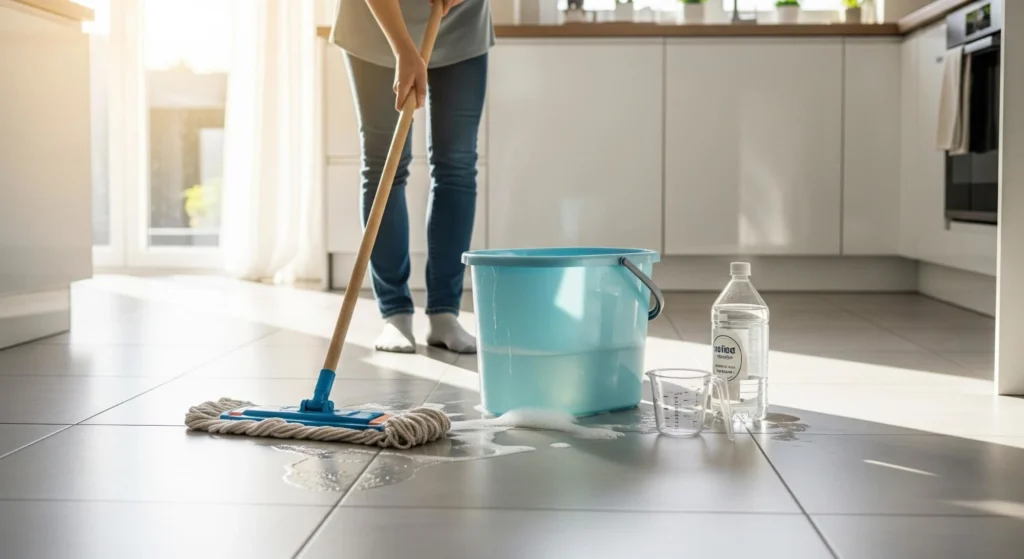
Mix half a cup of cleaning vinegar with one gallon of warm water for mopping tile, linoleum, or laminate floors. This solution cuts through dirt and leaves floors sparkling without residue. Always test in an inconspicuous area first.
Understanding the Antimicrobial Properties
Does vinegar kill germs? Studies indicate that cleaning vinegar has an ability to get rid of some bacteria and viruses, but it is not registered by EPA as a disinfectant. Research shows that it works against E. coli, Salmonella and others in full strength. Nevertheless, total disinfection in at-risk locations might require an additional step of using an EPA-registered disinfectant, particularly during cold and flu season.
In general household cleaning and antibiotic surplus common household bacteria, cleaning vinegar has sufficient antimicrobial effect when given sufficient time of contact (5-10 minutes on surfaces).
Creative Uses for Cleaning Vinegar
In addition to the traditional activities of cleaning vinegar, it has many unusual applications. Use vinegar on a cloth to remove sticky residue of price tags. Clean up garbage disposals by placing vinegar in ice cube trays and running the frozen cubes through the garbage disposal.
Clean shower heads by taking them out and putting them in a solution of cleaning vinegar or put a plastic bag with vinegar and use a rubber band around the shower head. Clean your fridge wiping everything with a vinegar solution which is effective in the neutralization of food smells.
Common Cleaning Vinegar Recipes
| Purpose | Recipe | Instructions |
| All-Purpose Cleaner | 1 cup vinegar, 1 cup water, 10 drops essential oil | Combine in spray bottle, shake before use |
| Glass Cleaner | 2 cups water, 1/2 cup vinegar, 1/4 cup rubbing alcohol | Mix ingredients, spray on glass surfaces |
| Carpet Deodorizer | 1 cup vinegar, 2 cups water | Lightly mist carpet, let dry completely |
Tips for Maximum Effectiveness
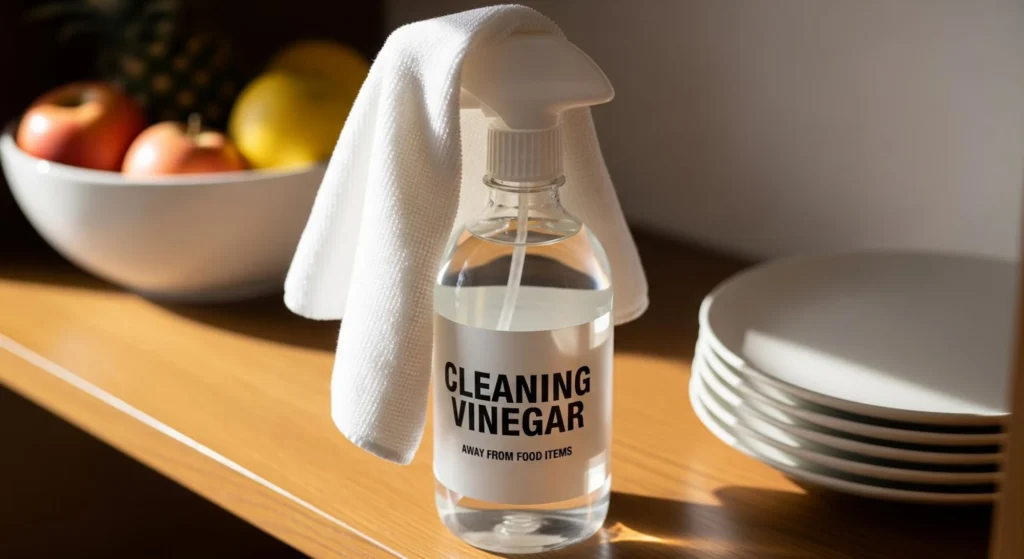
For best results when learning how to use cleaning vinegar, always allow adequate contact time. Most cleaning tasks require letting the vinegar solution sit for at least five minutes before wiping. Use microfiber cloths instead of paper towels for streak-free surfaces and better absorption.
Store your cleaning vinegar solutions in clearly labeled spray bottles away from food items. While cleaning vinegar is non-toxic, it should still be kept out of reach of children and pets.
Cost-Effective and Eco-Friendly
Cleaning vinegar is very cheap thus making it one of the greatest benefits of using vinegar. A gallon is only a few dollars and can be used in various ways after being diluted and therefore much more economical compared to commercial cleaners. Also, by refilling spray bottles, you are minimizing the use of plastic waste since you do not have to purchase new cleaning items.
Conclusion
Learning how to use cleaning vinegar makes your cleaning routine affordable, effective, and environmentally friendly. From kitchens to bathrooms, this natural solution supports everyday household cleaning while reducing exposure to harsh chemicals. However, for intensive situations such as end of lease cleaning in Melbourne, professional cleaning services are often essential to meet inspection standards and ensure the property is left spotless.
Beaurex Cleaning is the right choice in case you are in Melbourne, Australia, and would like to engage the services of a professional cleaning company that incorporates ecologically friendly products and methods.
Our skilled staff members provide outstanding services to both households and business establishments, and they lend their professional skills and expertise with the application of effective natural alternatives to ensure that your areas are clean.
FAQs
1. Can I use regular white vinegar instead of cleaning vinegar?
Yes, you can use regular white vinegar for most household cleaning tasks, though it’s slightly less potent with 5% acetic acid compared to cleaning vinegar’s 6%. For everyday cleaning jobs like wiping counters or cleaning windows, regular white vinegar works perfectly fine. However, for tougher jobs involving heavy mineral deposits or stubborn grime, cleaning vinegar’s extra strength provides better results.
2. Is cleaning vinegar safe to use around pets and children?
Cleaning vinegar is generally safe around pets and children since it’s a natural product without harsh chemicals or toxic fumes. However, the strong smell can be irritating, so ensure proper ventilation when cleaning and keep pets and children away from freshly cleaned areas until surfaces dry. Store cleaning vinegar bottles in secure locations out of reach, as undiluted vinegar can cause irritation if ingested or if it contacts eyes.
3. How long does cleaning vinegar last?
Cleaning vinegar has an indefinite shelf life when stored properly in a cool, dark place with the cap tightly sealed. The acetic acid acts as a natural preservative, preventing bacterial growth and maintaining its cleaning effectiveness for years. However, diluted vinegar solutions mixed with water should be used within a few weeks for optimal cleaning power and to prevent any potential bacterial growth in the water.
4. Can cleaning vinegar damage my washing machine?
No, cleaning vinegar will not damage your washing machine when used correctly and actually helps maintain it by removing mineral deposits and soap buildup. Use it monthly by running an empty hot water cycle with two cups of vinegar to keep your machine fresh and functioning efficiently. Avoid using vinegar in every single wash load, as excessive use over time could potentially affect rubber seals and gaskets.
5. What surfaces should I avoid cleaning with vinegar?
Never use cleaning vinegar on natural stone surfaces like marble, granite, or travertine, as the acid can etch and dull the finish permanently. Avoid using it on hardwood floors that aren’t sealed, cast iron cookware, electronics, and certain types of grout. Also skip using vinegar on gold-plated items, pearls, or delicate fabrics without testing first, as the acidity can cause damage to these sensitive materials.
6. Does cleaning vinegar need to be rinsed after use?
For most non-porous surfaces like glass, tiles, and countertops, rinsing isn’t necessary as the vinegar residue evaporates without leaving harmful chemicals behind. However, for surfaces that come into contact with food or for areas where you notice streaking, a quick rinse with clean water is recommended. On floors, rinsing helps prevent any sticky residue, especially if you’ve used a concentrated solution.
7. Can I mix cleaning vinegar with baking soda for better cleaning?
While the fizzing reaction between vinegar and baking soda looks impressive, mixing them actually neutralizes both products, reducing their individual cleaning effectiveness. Use them separately for best results: baking soda as a gentle abrasive scrub and vinegar as an acid-based cleaner and deodorizer. If you want to use both, apply baking soda first, scrub, rinse, then follow with vinegar for disinfecting.
8. Will the vinegar smell linger in my home?
The strong vinegar smell dissipates completely within a few hours as it evaporates, leaving no lingering odor behind. To speed up the process, open windows for ventilation or run fans while cleaning. If you find the smell too strong, add 10-15 drops of essential oils like lemon, lavender, or tea tree to your cleaning solution for a more pleasant fragrance.