
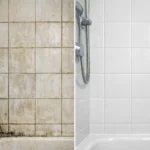
Dirty shower tiles are one of those household problems that seem to appear overnight. One day your bathroom looks clean and fresh, and the next you’re dealing with soap scum, stubborn grime, and patches of mould creeping into the grout lines. It’s not just about appearance either; unclean tiles can affect hygiene and even indoor air quality.
Whether you’re maintaining your bathroom with a quick weekly clean or tackling heavy build-up, knowing how to clean shower tiles properly can save you time, effort, and frustration.
This complete guide walks you through natural cleaning methods, mould removal techniques, and a step-by-step process, all tailored for Australian homes and humid conditions. By the end, you’ll have a practical system to keep your shower looking spotless year-round.
Why Shower Tiles Get Dirty So Quickly
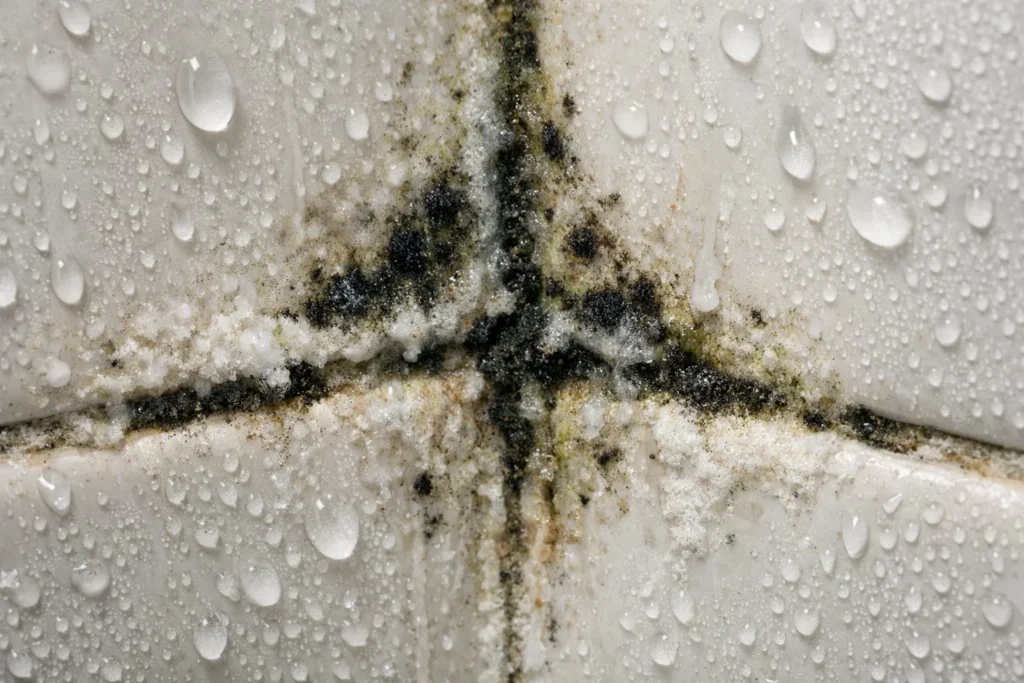
Shower tiles are constantly exposed to moisture, heat, and residue, making them one of the fastest areas in your home to accumulate dirt. In Australia, this problem becomes even more noticeable due to the humid climate in many regions, particularly in states like Queensland and New South Wales.
Several factors contribute to the rapid build-up:
- Hard water minerals leave behind chalky white deposits on tiles and grout
- Soap scum and body oils create a sticky film that traps dirt
- Poor ventilation keeps moisture locked in, encouraging mould growth
- Daily usage means surfaces rarely get a chance to fully dry
When these elements combine, they create the perfect environment for grime and bacteria to thrive. Understanding these causes is key not just for cleaning, but for preventing the problem from returning.
What You’ll Need Before You Start
Before you begin cleaning, it’s important to gather all the necessary tools and products. Being prepared will make the process quicker and far more efficient.
Essential Supplies:
- White vinegar
- Baking soda
- Hydrogen peroxide (3%)
- Spray bottle
- Grout brush or old toothbrush
- Microfibre cloth or non-abrasive sponge
- Rubber gloves
- Commercial tile cleaner (for deep cleaning)
- Squeegee
Having these items ready ensures you can move through the cleaning process without interruptions.
Cleaning Products and Their Best Uses
Different cleaning agents work best for different types of dirt. Choosing the right one can make a huge difference in both effectiveness and safety.
| Cleaning Agent | Best For | How to Use | Notes |
| White Vinegar | Soap scum, mineral stains | Spray, leave 10 mins, scrub | Avoid natural stone |
| Baking Soda | Grout stains | Paste, scrub, rinse | Gentle & safe |
| Hydrogen Peroxide | Mould & mildew | Spray, leave 15 mins, wipe | Ideal for grout |
| Commercial Cleaner | Heavy build-up | Follow instructions | Use ventilation |
How to Clean Shower Tiles Naturally
If you prefer to avoid harsh chemicals, natural cleaning methods can be surprisingly effective. They’re safe, affordable, and suitable for regular maintenance.
Vinegar and Water Solution
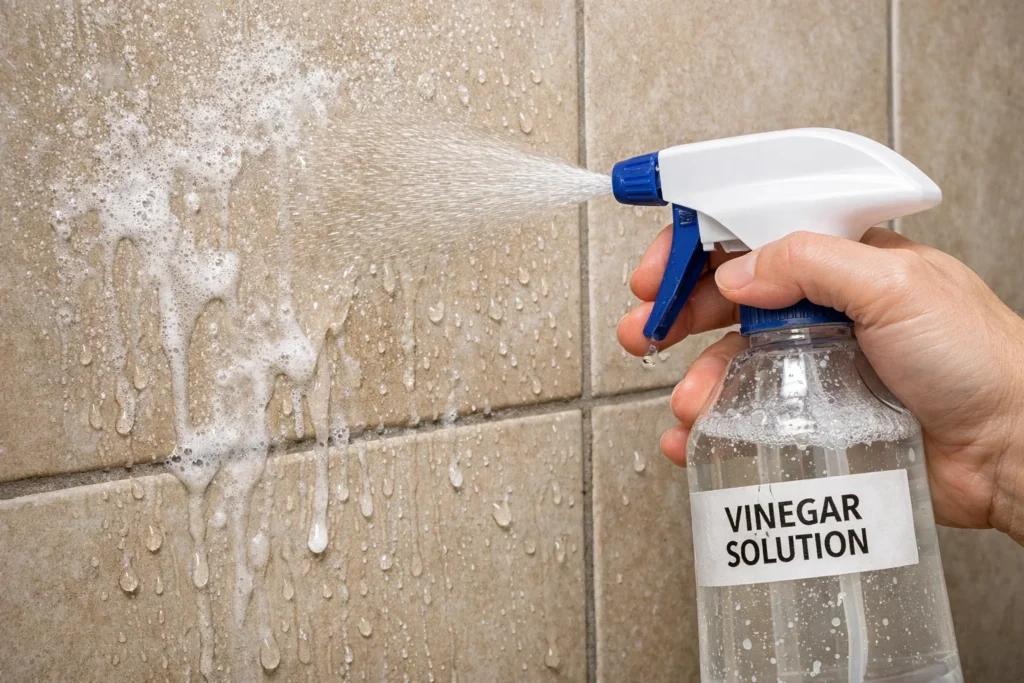
One of the simplest and most effective natural cleaners is a vinegar and water mix.
- Combine equal parts white vinegar and warm water in a spray bottle
- Spray generously over the tiles
- Let it sit for 10 minutes
- Scrub gently and rinse thoroughly
The acidity in vinegar helps break down soap scum and mineral deposits without damaging most tile surfaces.
Important: Avoid using vinegar on natural stone tiles such as marble or travertine, as it can cause etching.
Baking Soda for Grout Cleaning
Grout lines tend to trap dirt and become discoloured over time. Baking soda is perfect for this job due to its mild abrasive properties.
- Mix baking soda with water to form a thick paste
- Apply directly onto grout lines
- Scrub with a toothbrush
- Rinse clean with warm water
For extra cleaning power, spray vinegar over the paste. The fizzing reaction helps lift stubborn grime from deep within the grout.
How to Remove Mould from Shower Tiles
Mould is a common issue in bathrooms, especially in humid climates. It typically appears as black or dark grey spots along grout lines and silicone seals. Aside from being unsightly, mould can pose health risks if left untreated.
Hydrogen Peroxide Method
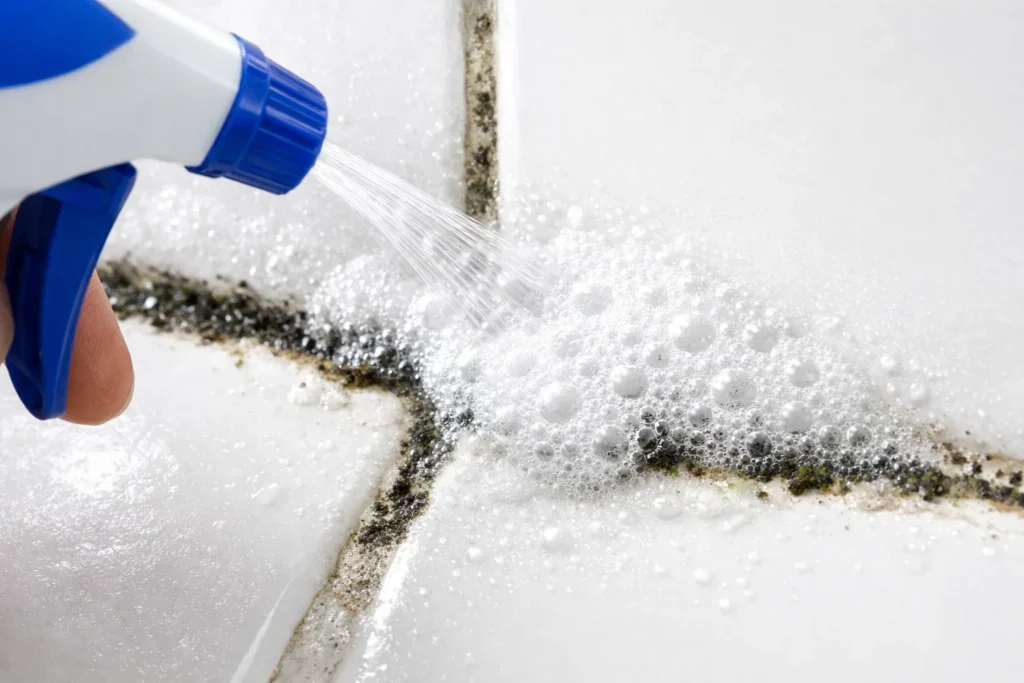
Hydrogen peroxide is one of the most effective and safer alternatives to harsh chemicals.
- Use a 3% hydrogen peroxide solution
- Spray directly onto mouldy areas
- Leave for at least 15 minutes
- Scrub and rinse thoroughly
This method works well for surface mould and is safe for most tile types, including ceramic and porcelain.
When to Use Bleach
For more severe mould problems, bleach may be necessary.
- Mix 1 part bleach with 10 parts water
- Apply carefully to affected areas
- Leave for 10 minutes
- Rinse thoroughly
Always ensure proper ventilation when using bleach by opening windows or turning on exhaust fans.
After cleaning, dry the area completely. Moisture is the main reason mould returns, so keeping surfaces dry is essential.
Best Way to Clean Shower Tiles: Step-by-Step
Following a consistent cleaning routine ensures better and longer-lasting results. Here’s a simple method you can follow:
- Wet tiles with warm water to loosen dirt
- Apply your chosen cleaning solution
- Let it sit for 5–15 minutes
- Scrub tiles and grout thoroughly
- Rinse from top to bottom
- Use a squeegee to remove water
- Dry surfaces with a microfibre cloth
The squeegee step is often overlooked but is one of the most effective ways to prevent future build-up.
Cleaning Frequency Guide
Maintaining a regular cleaning schedule keeps your shower in top condition and prevents heavy build-up.
| Task | Frequency | Method |
| Squeegee tiles | Daily | Manual |
| Light cleaning | Weekly | Vinegar spray |
| Grout scrubbing | Fortnightly | Baking soda |
| Deep cleaning | Monthly | Commercial cleaner |
| Mould removal | As needed | Peroxide or bleach |
Caring for Different Types of Shower Tiles
Not all tiles are the same, and using the wrong cleaning method can cause damage.
Ceramic and Porcelain Tiles
- Highly durable and low maintenance
- Safe to use vinegar and most cleaners
Glass Tiles
- Require streak-free cleaning
- Avoid abrasive scrubbers
Natural Stone Tiles
- Sensitive to acidic cleaners
- Use pH-neutral products only
- Seal every 6–12 months
Proper care ensures your tiles remain in good condition for years.
Tips to Keep Shower Tiles Clean for Longer
Prevention is always easier than deep cleaning. A few simple habits can significantly reduce the effort required to maintain your bathroom.
- Use a squeegee after every shower
- Keep windows or doors open to improve ventilation
- Switch to liquid soap to reduce residue
- Seal grout regularly
- Wipe tiles weekly with a dry cloth
These small actions can make a big difference over time and help you avoid frequent deep cleans.
When to Call in the Professionals
Sometimes a shower needs more than a DIY clean especially after a long period without maintenance, or when mould keeps coming back no matter what you try. If your grout is deeply stained, cracked, or the mould is persistent, a professional clean is well worth it. Services like Regular House cleaning services in Melbourne, Apartment Cleaning Service in Melbourne, and Office Cleaning services in Melbourne offer expert-level results with commercial-grade tools and products that simply aren’t available to the average consumer.
Professional tile and grout cleaning uses steam cleaners and sealants that reach deep into grout lines, removing staining and mould that household products can’t touch. For busy households or rental properties, a regular professional service is one of the smartest investments you can make.
Conclusion
Keeping your shower tiles clean doesn’t have to be a big ordeal. With the right techniques whether you’re going natural with vinegar and baking soda or tackling mould head-on with hydrogen peroxide a clean and hygienic shower is totally achievable without a lot of fuss.
Regular upkeep is the real secret. A quick squeegee after your morning shower, a weekly spray-down, and a fortnightly grout scrub will keep things in great condition between deeper cleans. And when life gets busy or the job gets too big, it’s always smart to bring in the pros.
If you’re after professional cleaning support in Melbourne, head over to https://beaurexcleaning.com.au/. Beaurex Cleaning delivers reliable, high-quality cleaning services across Melbourne from residential bathrooms through to full commercial spaces. Whether you need a one-off deep clean or consistent ongoing support, their team has you covered. A cleaner home starts with one smart move to reach out to Beaurex today.
FAQs
1. Can hard water make shower tiles harder to clean?
Yeah, hard water leaves behind mineral deposits that can be stubborn, so you might need a bit more elbow grease or regular descaling to keep things under control.
2. Do different shower sprays or soaps affect tile cleanliness?
They sure do, bar soaps tend to leave more residue, while liquid body wash usually results in 3. less soap scum on your tiles.
3. Is it okay to use a steam cleaner on shower tiles?
Yep, steam cleaners can be a great option for deep cleaning as they loosen grime and kill bacteria without needing chemicals.
4. How can I tell if my grout needs resealing?
If water no longer beads on the surface and soaks in instead, it’s a sign your grout seal has worn off and needs reapplying.
5. Are there tools that make tile cleaning quicker and easier?
Definitely, things like electric scrubbers or extendable brushes can save your back and cut down cleaning time.
6. Can poor bathroom design affect how dirty tiles get?
It can, limited airflow, bad drainage, or tight corners can trap moisture and make tiles dirtier faster.