
Yes, you can use baking powder for cleaning but with some important caveats. Baking powder does contain baking soda (sodium bicarbonate), which is the ingredient that gives it mild cleaning and deodorising properties. However, baking powder also contains cream of tartar and a cornstarch filler, which dilutes its cleaning strength considerably.
This means baking powder can work in a pinch when you’ve run out of baking soda, but it won’t be nearly as effective. For most baking powder cleaning uses, you’ll need to use a significantly larger amount to get the same result. Think of it as the backup player handy when needed, but not your first choice.
If you’ve got both in the cupboard, baking soda is always the stronger cleaner. But if baking powder is all you’ve got on hand, reading it can still get the job done for light cleaning tasks around the house.
Baking Powder vs Baking Soda Cleaning: Key Differences
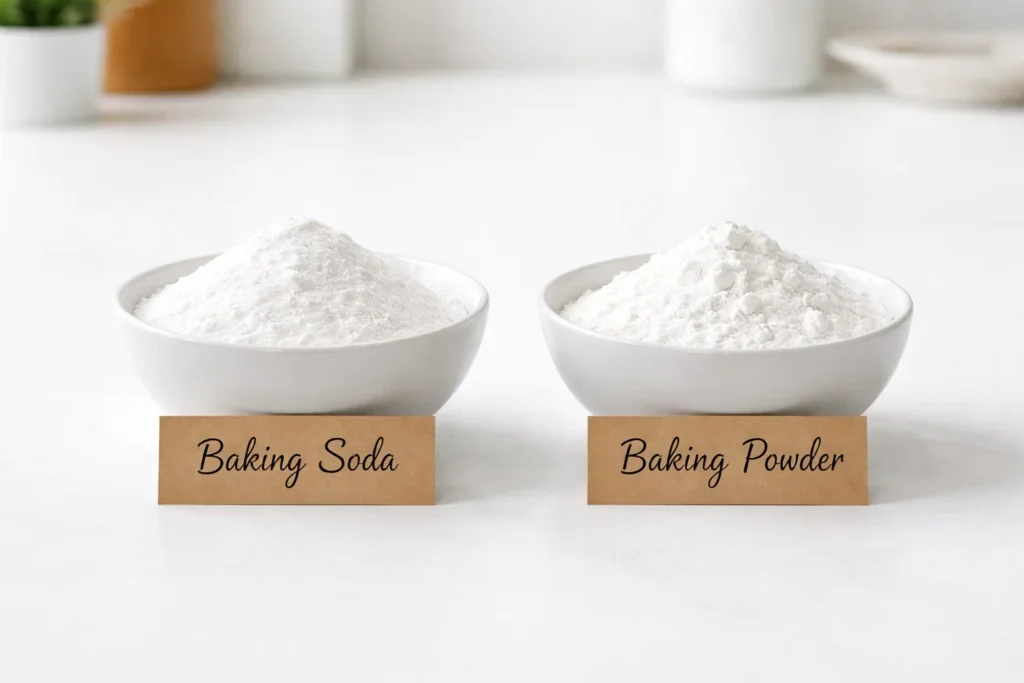
Before diving into specific uses, it helps to understand exactly how these two pantry staples differ when it comes to cleaning power.
| Feature | Baking Soda | Baking Powder |
| Main Active Ingredient | Sodium bicarbonate (100%) | ~25–30% sodium bicarbonate |
| Cleaning Strength | Strong | Mild to moderate |
| Deodorising Ability | Excellent | Limited |
| Residue Left Behind | Minimal | May leave starchy film |
| Cost Effectiveness | Better value for cleaning | Less economical |
| Best Used For | Heavy-duty scrubbing, odours | Light surface cleaning |
The baking powder vs baking soda cleaning debate has a clear winner but baking powder still earns its place when used correctly for lighter tasks around the home.
What Can Baking Powder Actually Clean?
Baking powder cleaning uses are more limited than baking soda, but it can still handle a number of light household tasks. The mild abrasive texture helps lift grime, and the alkaline content helps neutralise acidic stains and odours to a degree.
1. Light Kitchen Surface Cleaning
Baking powder can be sprinkled onto benchtops, sinks, and stovetops to gently scrub away light grease and food residue. Dampen a cloth or sponge, dip it into the baking powder, and scrub in circular motions. Rinse thoroughly afterwards to avoid any starchy film left behind on shiny surfaces.
2. Deodorising Rubbish Bins
Toss a couple of tablespoons of baking powder into the bottom of your kitchen bin to absorb unpleasant smells. While baking soda is more effective at this, baking powder does a reasonable job for short-term odour control. Replace it every few days for best results.
3. Freshening Up Carpets and Upholstery
Sprinkle baking powder over carpets or fabric upholstery, leave it for 15 to 20 minutes, then vacuum it up. It can help lift mild odours from pets, food, or general mustiness. You’ll need to use more than you would baking soda to get a similar result.
4. Cleaning Slow Drains
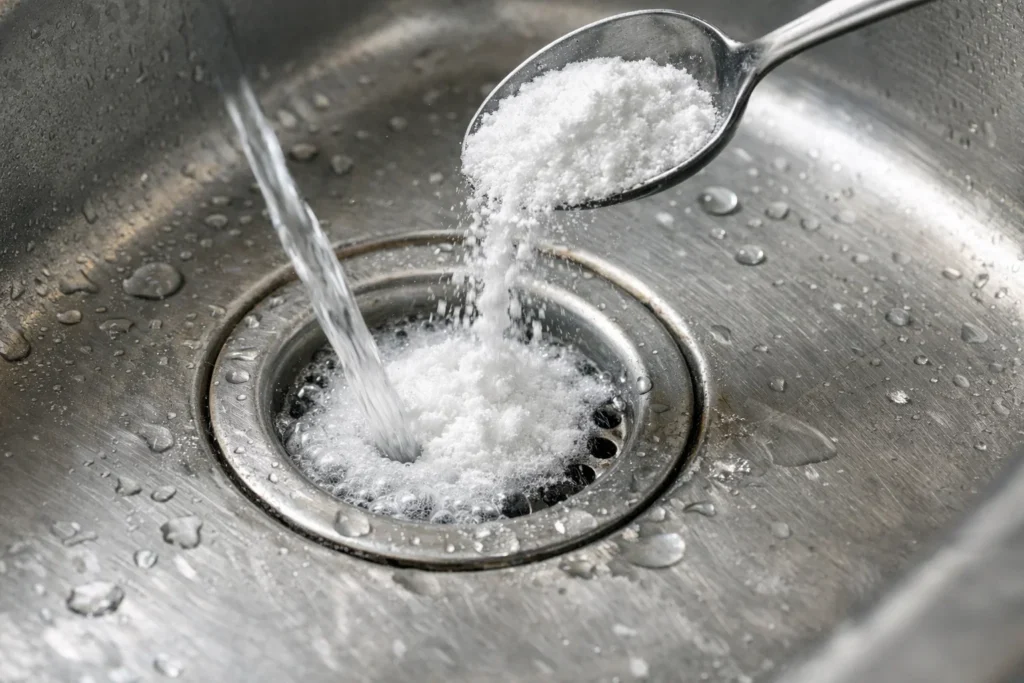
Pour baking powder down a slow drain followed by hot water or white vinegar to help break down minor build-up. The fizzing reaction can shift light grease and soap scum from the pipes. For a stubborn blockage, baking soda with vinegar is significantly more effective.
5. Mild Oven and Microwave Cleaning
Mix baking powder with a small amount of water to form a paste and apply it to the interior of your oven or microwave. Leave for 20 to 30 minutes, then wipe away. It won’t tackle heavy baked-on grease as well as baking soda, but it’s a gentle option for regular maintenance cleaning.
How to Clean With Baking Powder: Step-by-Step
Knowing how to clean with baking powder properly helps you get the most out of it. The key is understanding its limitations and adjusting your approach accordingly.
For dry surface applications:
- Sprinkle baking powder directly onto the surface or area you want to clean
- Use a damp cloth, sponge, or soft brush to work it into the surface
- Leave it to sit for 5 to 10 minutes on tougher stains or odour-prone areas
- Rinse thoroughly with warm water and wipe dry
For paste-based applications (ovens, grout, tiles):
- Mix 3 tablespoons of baking powder with 1 tablespoon of water to form a thick paste
- Apply the paste using a sponge or old toothbrush to the target area
- Allow it to sit for at least 15 to 20 minutes before scrubbing
- Wipe clean and rinse well to remove any starchy residue
One important tip: always rinse surfaces thoroughly when using baking powder for cleaning. The cornstarch filler can leave a dull, filmy residue on glass or stainless steel if not fully rinsed away.
Baking Powder Cleaning Uses: Quick Reference
| Cleaning Task | Baking Powder | Baking Soda | Notes |
| Kitchen benchtops | ⭐⭐⭐ | ⭐⭐⭐⭐⭐ | Rinse well to avoid residue |
| Sink scrubbing | ⭐⭐⭐ | ⭐⭐⭐⭐⭐ | Works on porcelain and stainless |
| Carpet deodorising | ⭐⭐ | ⭐⭐⭐⭐ | Use generously, vacuum well |
| Drain cleaning | ⭐⭐ | ⭐⭐⭐⭐ | Best combined with vinegar |
| Oven cleaning | ⭐⭐ | ⭐⭐⭐⭐⭐ | Baking soda strongly preferred |
| Bin deodorising | ⭐⭐⭐ | ⭐⭐⭐⭐⭐ | Replace every few days |
| Grout and tiles | ⭐⭐ | ⭐⭐⭐⭐ | Use paste method for best results |
When Baking Powder Won’t Cut It
There are certain situations where baking powder simply won’t be effective enough, and it’s worth knowing these limits upfront. Using the wrong product on the wrong mess wastes time and effort.
Avoid relying on baking powder for these tasks:
- Heavy-duty oven cleaning with thick, baked-on carbon deposits
- Mould and mildew removal a dedicated anti-mould product or white vinegar is needed
- Disinfecting surfaces baking powder has no antibacterial properties whatsoever
- Removing limescale from taps, showerheads, or kettles
- Deep stain removal from grout, porous stone, or heavily soiled fabric
For tougher jobs, a professional clean is often the most practical solution. If you’re in Melbourne’s northern suburbs, the team behind cleaning services in Broadmeadows can handle the heavy lifting from deep kitchen cleans to full property maintenance, leaving your home spotless without the elbow grease.
Is Baking Powder Safe on All Surfaces?
Baking powder is generally safe for most common household surfaces. The mild abrasive texture makes it suitable for scrubbing without scratching, and it’s non-toxic and eco-friendly compared to harsh chemical cleaners.
Safe to use on:
- Porcelain and ceramic sinks, tubs, and tiles
- Stainless steel benchtops and appliances (rinse thoroughly)
- Plastic containers and lunchboxes
- Sealed timber surfaces with light staining
- Fabric upholstery and carpets for spot cleaning
Avoid using baking powder on unsealed natural stone such as marble or granite, as the alkaline nature can dull the surface over time. It’s also not recommended on aluminium cookware, as it can cause discolouration with repeated use.
Final Thoughts
So, can you use baking powder for cleaning? Absolutely and now you know exactly how and where to use it effectively. It’s a handy, natural, and non-toxic option for light household cleaning tasks, particularly when baking soda isn’t available. Just remember to use it generously, rinse surfaces thoroughly, and don’t expect it to tackle the heavy stuff.
Natural cleaning products like baking powder are a great starting point for an eco-friendly routine. But there’s an honest limit to what any pantry ingredient can achieve: deep grime, stubborn stains, and full-home refreshes require professional-grade equipment and expertise.
That’s exactly where Beaurex Cleaning comes in. As a locally owned, family-run Melbourne cleaning company, they offer everything from regular house cleans and deep spring cleans to end-of-lease and commercial cleaning across the city. If you’re in Melbourne’s inner north, House Cleaning In Strathmore is one of the many areas their team covers delivering the kind of thorough, detailed results that no amount of baking powder can replicate. For a home that’s genuinely clean from top to bottom, get in touch with the Beaurex team and book your clean today.
FAQs
1. Can you use baking powder for cleaning?
Yes, you can use baking powder for cleaning, but it’s less effective than baking soda due to added fillers. It works best for light cleaning jobs when you’re in a pinch.
2. What is the difference between baking powder and baking soda for cleaning?
Baking soda is pure sodium bicarbonate, making it stronger and better for cleaning. Baking powder is diluted with other ingredients, so it has weaker cleaning power.
3. Is baking powder good for removing odours?
It can absorb mild odours, but it’s not as effective as baking soda. You’ll need to use more and replace it more often for decent results.
4. What surfaces can you clean with baking powder?
You can use it on sinks, benchtops, tiles, and even carpets for light cleaning. Just make sure to rinse well to avoid any residue.
5. Can baking powder clean kitchen surfaces?
Yes, it can help remove light grease and food residue from kitchen surfaces. It’s a gentle scrub, so it’s better for maintenance rather than heavy cleaning.