Hydrogen peroxide is one of those humble staples hiding in your medicine cabinet that deserves a lot more credit. It’s affordable, widely available, and surprisingly powerful when it comes to household cleaning. If you’ve been reaching for harsh chemical sprays to tackle grime, mold, and bacteria, it might be time to give this clear liquid a proper go.
This guide walks you through everything you need to know about how to use hydrogen peroxide for cleaning safely, effectively, and across every corner of your home.
Is Hydrogen Peroxide Good for Cleaning?
Before diving into the how-to, it’s fair to ask: is hydrogen peroxide good for cleaning in the first place? The short answer is yes and here’s why.
Hydrogen peroxide (H₂O₂) is a mild antiseptic and oxidising agent. When it contacts organic matter like bacteria, mould, and mildew, it releases oxygen molecules that break down and destroy those microorganisms. Unlike bleach, it decomposes into water and oxygen, leaving behind no harmful residue.
Key benefits that make it worth using:
- Non-toxic after decomposition safe for households with kids and pets
- Effective against bacteria, viruses, mould, and mildew
- Doesn’t leave harsh chemical smells or toxic residue behind
- Widely available at most Australian chemists and supermarkets
- Environmentally friendlier than many commercial cleaning products
The standard 3% hydrogen peroxide solution is the right concentration for general home cleaning. Anything stronger like 35% industrial-grade is not suitable for household use and should be avoided entirely.
| Concentration | Common Use | Safe for Home Use? |
| 3% | General household cleaning and disinfecting | Yes |
| 6–10% | Hair bleaching, some commercial cleaning | With caution |
| 35% | Industrial and food processing grade | No too strong |
| 90%+ | Industrial and scientific purposes only | No |
How to Use Hydrogen Peroxide for Cleaning Around Your Home
The great thing about hydrogen peroxide is how versatile it is. From bathroom tiles to kitchen benches, it covers a lot of ground. Here is a room-by-room breakdown so you know exactly where and how to put it to work
Hydrogen Peroxide for Bathroom Cleaning
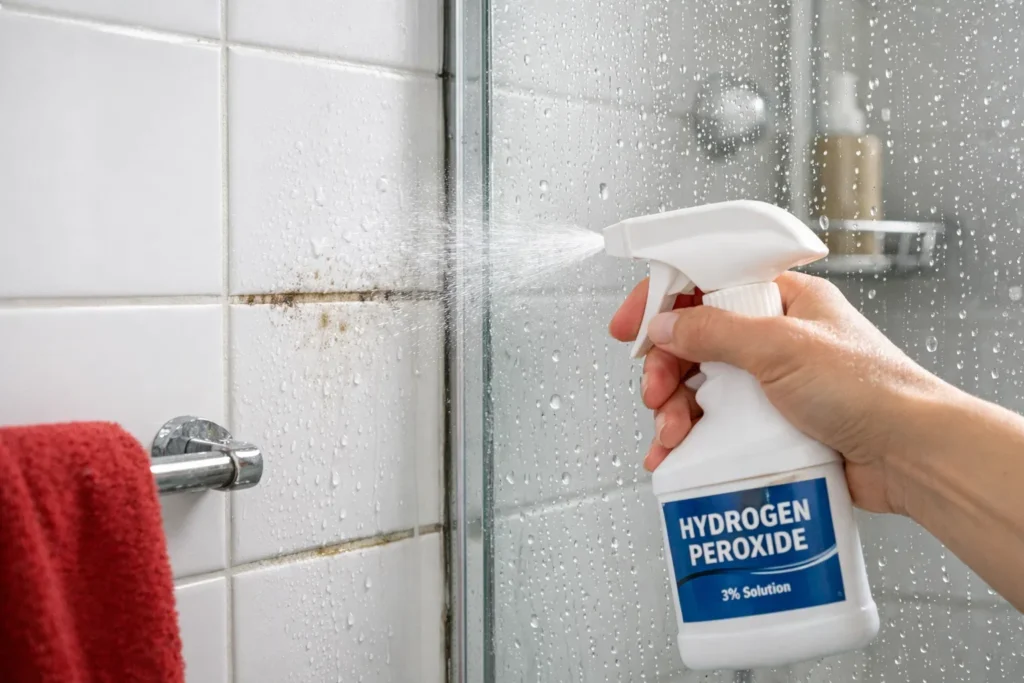
The bathroom is one of the most bacteria-prone spots in any home. Warm, moist conditions make it a breeding ground for mould, mildew, and germs. Hydrogen peroxide for bathroom cleaning is a genuinely effective solution that doesn’t fill the room with harsh chemical fumes or leave behind toxic residue.
Here is how to use it effectively in the bathroom:
- Spray undiluted 3% hydrogen peroxide directly onto tiles, grout, and shower screens
- Let it sit for 10 to 15 minutes before scrubbing and rinsing this gives it time to break down mould spores
- For toilet bowls, pour half a cup in, let it sit for 20 to 30 minutes, then scrub and flush
- Wipe down bathroom benches, taps, and sink basins with a cloth dampened in hydrogen peroxide
- For persistent grout mould, apply a paste of hydrogen peroxide and baking soda, scrub firmly, then rinse
One important note: don’t mix hydrogen peroxide with vinegar in the same spray bottle. Used separately, both are effective. Combined, they form peracetic acid, which can irritate skin and airways. Apply them one at a time with a rinse in between.
Hydrogen Peroxide for Kitchen Cleaning
The kitchen sees everything: food spills, raw meat residue, grease splatter, and general daily mess. Hydrogen peroxide for kitchen cleaning is particularly useful for disinfecting food-contact surfaces, since it breaks down completely and leaves no toxic residue behind.
Practical ways to use it in the kitchen:
- Spray kitchen benchtops, cutting boards, and sink areas after cooking especially after handling raw meat or poultry
- Clean the inside of the refrigerator by spraying and wiping completely safe around food storage areas
- Disinfect sponges and dish brushes by soaking them in hydrogen peroxide for a few minutes
- Spray onto stovetop surfaces and let it sit before wiping to lift grease and kill bacteria
- Use on bin areas and rubbish bin lids where odour-causing bacteria tend to build up
For cutting boards especially, hydrogen peroxide tackles bacteria like Salmonella and E. coli that linger after washing. Spray it on, wait five minutes, then rinse with clean water.
Other Areas Around the Home
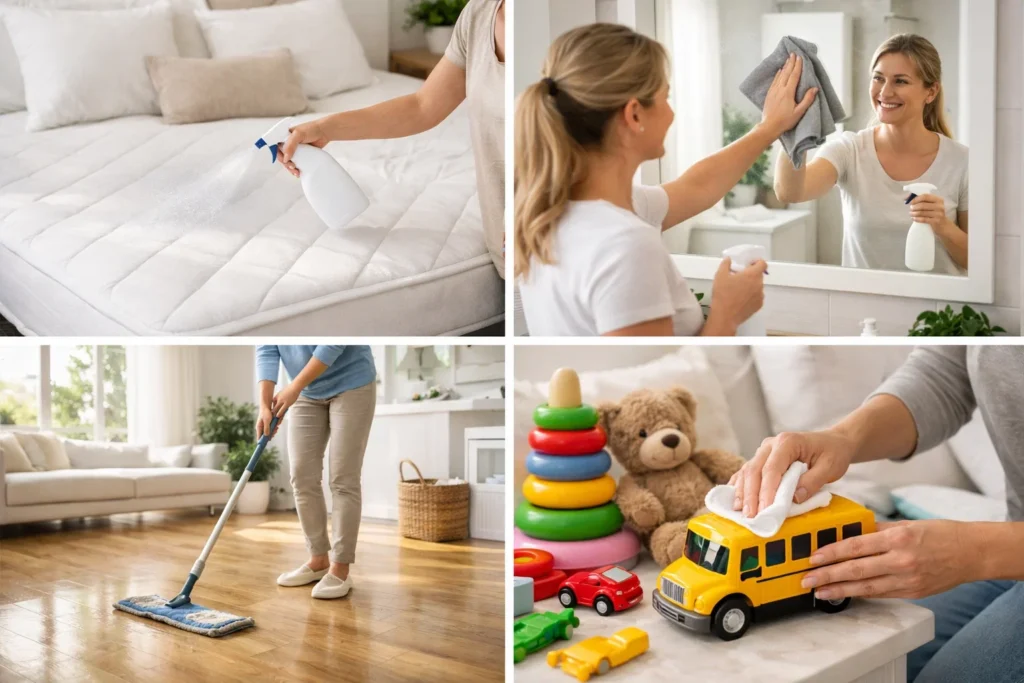
Beyond the bathroom and kitchen, hydrogen peroxide has plenty of other useful applications throughout your home.
- Laundry: Add a cup to your wash cycle to brighten whites and remove stubborn stains a gentler alternative to bleach
- Mattresses: Lightly spray to kill dust mites and bacteria, then allow to air dry completely before remaking the bed
- Glass and mirrors: Dilute with equal parts water in a spray bottle for a streak-free, residue-free clean
- Floors: Add to a mop bucket with water for a disinfecting clean effective on tiles and vinyl surfaces
- Kids’ toys: Spray, wipe, and air dry safe once dry with no harmful residue left behind
Safety Tips for Using Hydrogen Peroxide at Home
Hydrogen peroxide is generally very safe at 3% concentration, but a few sensible precautions are worth keeping in mind when using it regularly around the home.
- Store in a dark, cool place light and heat break it down quickly and reduce its effectiveness
- Keep it in the original brown bottle or use a dark spray bottle clear containers speed up degradation
- Don’t use on coloured fabrics without testing first it can bleach certain dyes
- Avoid contact with eyes if splashed, rinse immediately with plenty of water
- Never mix with bleach, ammonia, or vinegar in the same container
- Keep stored spray bottles out of reach of children
At 3% concentration, hydrogen peroxide is non-toxic once it decomposes, making it a much safer everyday option than many commercial disinfectants. That said, wearing gloves for extended cleaning sessions is always a sensible habit.
Quick Reference: Hydrogen Peroxide Cleaning by Area
| Area | Application Method | Contact Time | Best For |
| Bathroom tiles and grout | Spray undiluted, scrub | 10–15 minutes | Mould, mildew, bacteria |
| Toilet bowl | Pour half a cup, scrub | 20–30 minutes | Disinfecting and stain removal |
| Kitchen benchtop | Spray and wipe | 5 minutes | Food-safe disinfection |
| Cutting boards | Spray and rinse | 5 minutes | Salmonella and E. coli |
| Fridge interior | Spray and wipe | 5 minutes | Odour and bacteria control |
| Laundry | Add to wash cycle | Full wash | Brightening and stain removal |
| Floors tile and vinyl | Diluted in mop bucket | Standard mop | General disinfection |
When Hydrogen Peroxide Isn’t Enough
While hydrogen peroxide is a brilliant everyday cleaning ally, it does have its limits. It works well on surface bacteria and light-to-moderate mold. However, for deep-set stains, heavy grease buildup, embedded grime, or extensive mold problems, you’ll need more than a spray bottle.
Professional cleaning services bring the right equipment, commercial-grade products, and the expertise to tackle the kind of buildup that hydrogen peroxide simply can’t shift on its own. This is especially true for end-of-lease cleans, post-renovation cleaning, or homes that haven’t had a thorough deep clean in a while.
Conclusion
Hydrogen peroxide is a genuinely underrated cleaning product. It’s affordable, effective against bacteria and mould, safe around food and family, and far kinder to the environment than many commercial alternatives. Whether you’re tackling bathroom mould, disinfecting kitchen surfaces, or freshening up the laundry, it earns a permanent spot in your cleaning routine.
That said, some cleaning jobs call for professional hands. If you’re across Melbourne and looking for reliable, thorough cleaning whether it’s a regular fortnightly tidy, a full deep clean, or an end-of-lease job the team at Beaurex Cleaning has you covered.
From cleaning services in Broadmeadows to House Cleaning In Strathmore and everywhere in between, Beaurex is a locally owned, family-run Melbourne business that uses safe, eco-friendly products and delivers spotless results every single visit.
FAQs
1. What is hydrogen peroxide used for in cleaning?
Hydrogen peroxide is used as a disinfectant to kill bacteria, mould, and viruses on household surfaces. It works by releasing oxygen that breaks down harmful microorganisms.
2. Is hydrogen peroxide safe for home cleaning?
Yes, the standard 3% solution is safe for everyday household use when used properly. It breaks down into water and oxygen, leaving no toxic residue behind.
3. How do you use hydrogen peroxide for bathroom cleaning?
Spray it directly onto tiles, grout, and surfaces, then let it sit before scrubbing. This helps kill mould and bacteria without harsh chemical fumes.
4. Can hydrogen peroxide be used in the kitchen?
Yes, it’s great for disinfecting benchtops, cutting boards, and sinks. It’s especially useful after handling raw food since it leaves no harmful residue.
5. How long should hydrogen peroxide sit before wiping?
Let it sit for about 5 to 15 minutes depending on the surface and level of grime. This gives it enough time to properly disinfect and break down dirt.