


Office chair wheels collect more gunk than most people realise. Every time you roll across the floor, the casters pick up hair, dust, carpet fibres, and general floor debris. Over time, this builds up into thick, tangled clumps that stop the wheels from rolling properly.
Dirty wheels can scratch your floors, make your chair feel stiff, and even slow you down during your workday. A clean, smoothly rolling chair is a small thing but it makes a real difference to your comfort and productivity.
What Happens When You Ignore the Casters
Ignoring your office chair casters doesn’t just look untidy it causes real damage. Built-up debris puts pressure on the wheel axle, which can wear it out much faster than normal.
On hard floors like timber or vinyl, a clogged caster drags instead of rolls, leaving marks and scuff lines behind. On carpet, it pulls fibres out and causes uneven wear over time. The longer you leave it, the harder it becomes to remove debris from chair wheels without needing to replace parts entirely.
Tools You’ll Need Before You Start
Getting the right tools together before you start makes the whole job quicker and easier. You don’t need anything fancy, most of these items are already around the house or office.
Here’s what to grab:
- A flathead screwdriver or seam ripper
- A pair of scissors
- Rubber gloves
- An old toothbrush or small cleaning brush
- A microfibre cloth
- Warm water and mild dish soap
- Rubbing alcohol or white vinegar
- A dry towel
How to Clean Office Chair Wheels: Step-by-Step
Step 1: Flip the Chair and Remove the Casters
Turn your chair upside down on a flat surface so you can clearly see the wheels. Most office chair casters simply pull out with a firm tug, grip the wheel and pull straight down.
If your casters are screwed in, use a flathead screwdriver to release them. Put each caster aside in a small bowl or tray so you don’t lose any parts while you work.
Step 2: Remove Debris from Chair Wheels by Hand
This is the most important step when it comes to how to remove debris from chair wheels. Use your fingers, a seam ripper, or scissors to pull out the tangled hair and carpet fibres wrapped around the axle.
Work slowly and pull from the outer edge inward. A pair of tweezers can help dislodge anything stubborn sitting deep in the wheel groove.
Step 3: Scrub the Wheels with Soap and Water
Mix warm water with a small amount of dish soap in a bowl. Dip your toothbrush into the solution and scrub around the wheel casing, axle hole, and outer surface of each caster.
Getting into every crevice and corner soap loosens the oily grime that sticks to the plastic after years of rolling across floors. Rinse with clean water and pat dry with a cloth.
Step 4: Disinfect and Polish
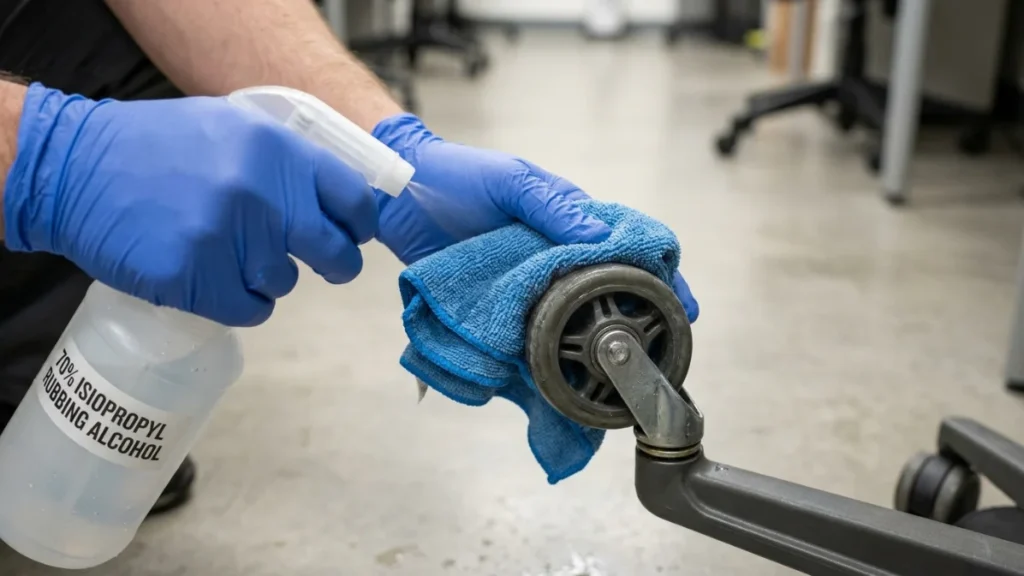
Once the wheels are clean, wipe each one down with rubbing alcohol or a white vinegar solution. This removes any remaining bacteria and gives the plastic a clean finish.
Let the casters air dry completely before reattaching them, snapping wet wheels back in can trap moisture inside the axle housing, which causes long-term damage.
Step 5: Reattach and Test
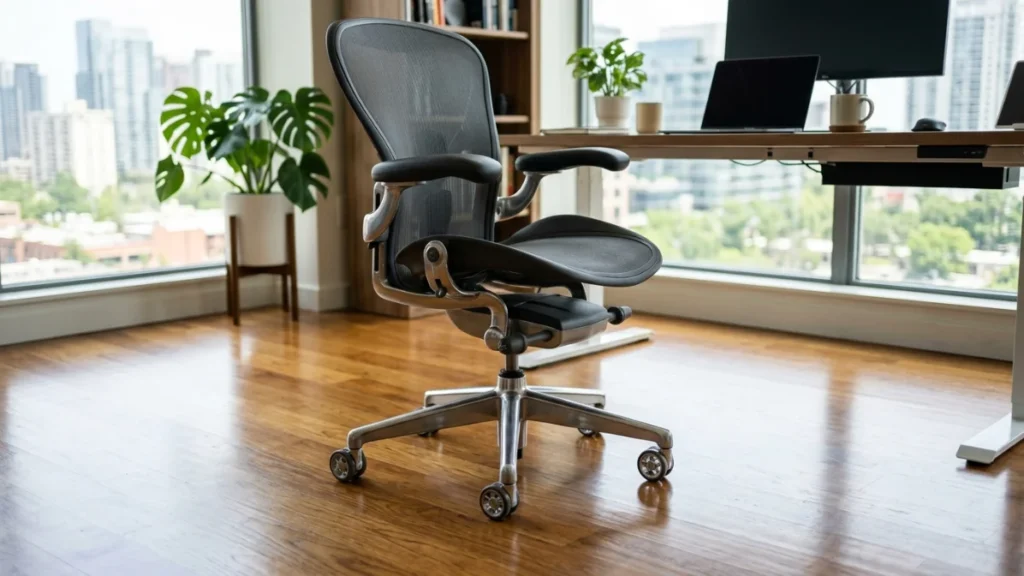
Push each caster firmly back into its socket on the chair base until you hear a click. Flip the chair back over and roll it around to check that every wheel moves freely and smoothly.
If a caster still feels stiff after cleaning, apply a tiny drop of silicone-based lubricant to the axle to avoid WD-40 as it attracts dust and makes the problem worse over time.
Quick Reference: How to Clean Office Chair Casters
| Step | Action | Tool Required |
| 1 | Remove casters from chair base | Flathead screwdriver |
| 2 | Pull out hair and debris by hand | Scissors or seam ripper |
| 3 | Scrub with soap and water | Old toothbrush |
| 4 | Disinfect the wheel surface | Rubbing alcohol or vinegar |
| 5 | Dry and reattach casters | Dry microfibre cloth |
How Often Should You Clean Your Chair Wheels?
Most people never think to clean their chair wheels until they stop moving altogether. A simple maintenance routine keeps them in good condition all year round.
Recommended cleaning frequency:
- Light use (home office): Every 3 months
- Moderate use (shared workspace): Every 6 weeks
- Heavy use (busy office floor): Every 2–4 weeks
If you notice squeaking, dragging, or resistance while rolling, that’s your chair telling you it’s time to clean the casters; don’t wait until the scheduled date.
Preventing Debris Build-Up on Chair Wheels
Cleaning is important, but preventing the build-up in the first place saves you a lot of effort. A few simple habits can keep your casters cleaner for longer.
Tips to reduce debris build-up:
- Use a chair mat on carpet floors to reduce fibre pick-up
- Vacuum the area around your desk regularly
- Avoid rolling over cables, cords, or loose items on the floor
- Wipe the wheels down quickly with a damp cloth every few weeks
These small habits make cleaning office chair casters a much quicker job each time you do it.
Hard Floor vs Carpet: Does It Make a Difference?
The type of flooring under your desk affects how quickly your casters get dirty and what kind of debris builds up. Knowing this helps you plan your cleaning schedule more accurately.
| Floor Type | Common Debris | Cleaning Frequency |
| Carpet | Hair, fibres, dust | Every 3–4 weeks |
| Hardwood/Timber | Dust, fine particles | Every 6–8 weeks |
| Vinyl/Tile | Grit, dust, moisture | Every 6–8 weeks |
| Mixed surfaces | All of the above | Every 2–3 weeks |
Carpet floors are the worst offenders by far. The fibres wrap tightly around the axle and are the main reason people need to remove debris from chair wheels in the first place.
When to Replace Your Casters Instead of Cleaning Them
Sometimes no amount of cleaning will fix a caster that’s already past its useful life. Knowing when to replace rather than clean saves you time and frustration.
Replace your casters if you notice:
- Cracks or chips in the wheel casing
- The wheel no longer spins even after cleaning
- The axle pin is bent or broken
- Loud grinding noises that persist after cleaning and lubricating
Replacement casters are inexpensive and widely available at hardware stores and online. Most universal casters are easy to swap in without any tools.
Conclusion
Knowing how to clean office chair wheels is one of those simple maintenance tasks that pays off every single day. Clean casters protect your floors, extend the life of your chair, and keep your workspace looking and feeling sharp.
If you’re keeping your office clean and well-maintained, the chair wheels are just one piece of the puzzle. For businesses across Melbourne that want a truly clean workspace not just the obvious surfaces Beaurex Cleaning is the team to call. They specialise in Office Cleaning Services in Melbourne and offer thorough Deep Cleaning in Melbourne that goes beyond the basics covering every corner, surface, and detail your team doesn’t have time to reach. Because a clean office isn’t just about appearances; it’s about creating a space where people actually want to work.
FAQs
1. How Often Should You Clean Office Chair Wheels?
For most home offices, every few months does the trick. In busy shared spaces, you may need to clean them more often to stop grime building up.
2. What Is the Best Way to Clean Office Chair Wheels?
Remove the casters, pull out hair and debris, then scrub them with warm soapy water. A proper clean keeps them rolling smoothly.
3. How Do You Remove Hair From Office Chair Wheels?
Use scissors, tweezers, or a seam ripper to gently pull tangled hair from around the axle. It can be fiddly, but it makes a big difference.
4. Why Are My Office Chair Wheels Not Rolling Properly?
Hair, dust, and carpet fibres often clog the wheels and stop them moving freely. A good clean usually sorts the problem out.
5. Can You Clean Office Chair Casters Without Removing Them?
You can do a quick surface clean while they’re attached, but removing them gives you a much better clean. It lets you get right into the gunk.