


Your office chair puts up with a lot of long work hours, daily spills, sweat, and the occasional lunch at the desk. Over time, all of that builds up into something that’s not just unsightly but also unhygienic. Knowing how to clean an office chair properly can extend its life, improve your comfort, and keep your workspace feeling fresh and professional.
Why Cleaning Your Office Chair Actually Matters
Most people vacuum the floor, wipe down the desk, and completely forget about the chair. But your office chair is one of the most touched surfaces in your workspace. It collects skin cells, sweat, dust mites, and bacteria every single day. A dirty chair doesn’t just look bad; it can also trigger allergies and skin irritation over time.
Regular cleaning also protects your investment. Office chairs aren’t cheap, and maintaining them properly means they last longer and perform better. A clean chair simply makes your workspace a more pleasant place to be.
What You’ll Need Before You Start
Before diving in, gather the right supplies. Using the wrong products can damage the material and void your chair’s warranty. Here’s a general list to get you started:
- Mild dish soap or upholstery cleaner.
- White vinegar and water (for natural cleaning).
- Microfibre cloths (at least two one for cleaning, one for drying).
- Soft-bristle brush or old toothbrush.
- Vacuum cleaner with an upholstery attachment.
- Rubbing alcohol (for leather or spot treatments).
- Baking soda (for odour removal).
What Is the Best Way to Clean Office Chair By Material Type
Not all office chairs are built the same, and using a one-size-fits-all approach can cause real damage. The best way to clean office chair surfaces is to first identify what your chair is made of fabric, mesh, or leather and then use the right method for that specific material. Each material has its own cleaning needs, drying time, and product compatibility. Getting this right from the start saves you time and protects the chair from unnecessary wear.
How to Clean a Fabric Office Chair
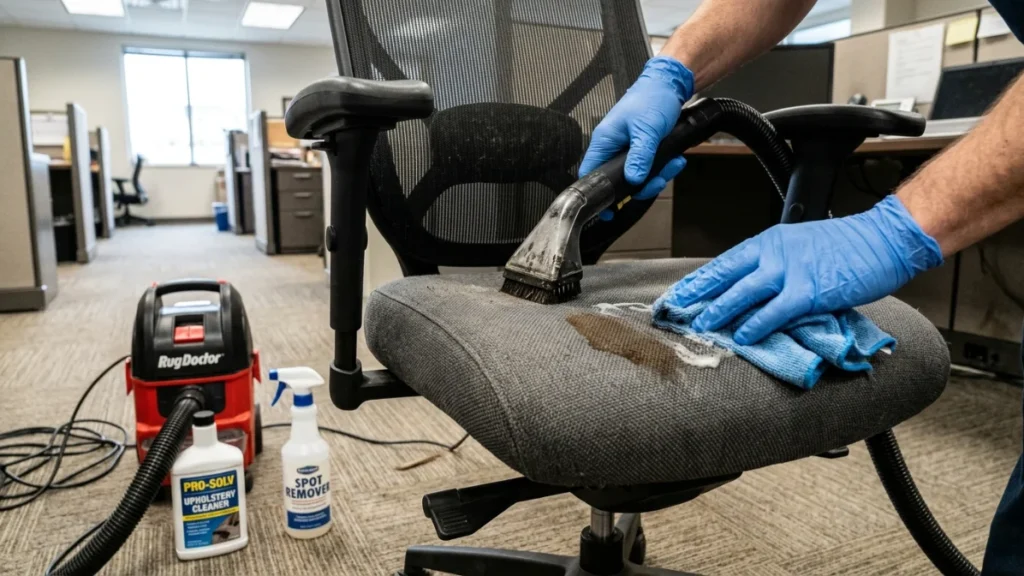
Fabric chairs are the most common, and they’re also the most likely to trap dust, food crumbs, and stains. The best way to clean office chair fabric is to start dry before introducing any moisture.
Step-By-Step Process:
- Vacuum the entire chair thoroughly, including under the armrests and seat cushion.
- Mix a small amount of mild dish soap with warm water to create a light lather.
- Dip a microfibre cloth into the solution and gently blot don’t rub any stained areas.
- Work from the outside of the stain inward to avoid spreading it.
- Wipe down with a clean damp cloth and allow the air to dry completely.
Never soak the fabric. Excess moisture can lead to mold or mildew forming underneath the padding, especially in humid Australian weather.
How to Clean Mesh Office Chair
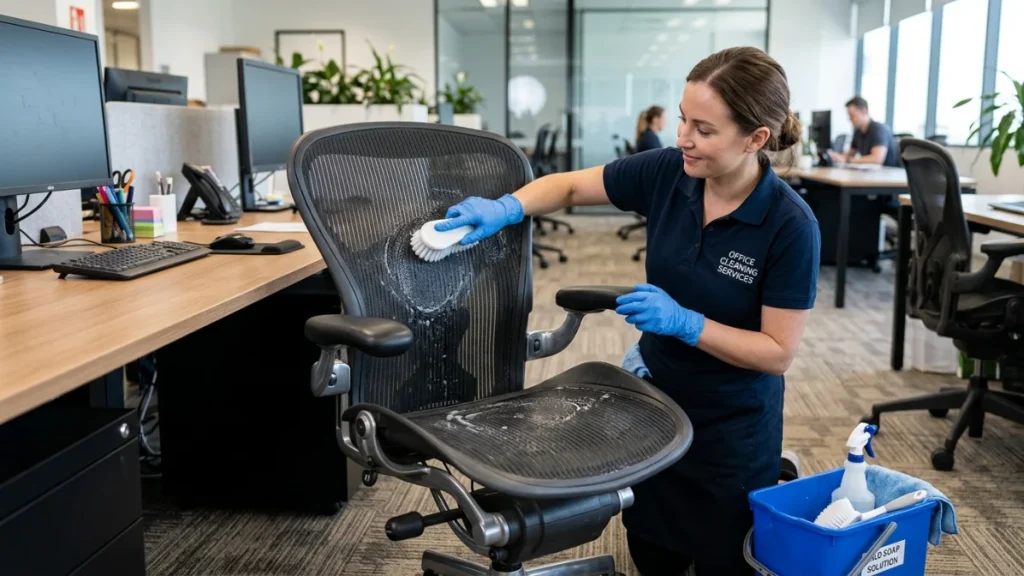
Mesh chairs are popular for their breathability, but the open weave structure actually traps a surprising amount of dust and fine particles. Learning how to clean mesh office chair surfaces properly requires a slightly different approach.
What Works Best For Mesh:
- Use a vacuum with a brush attachment to lift surface dust from the mesh.
- Mix warm water with a few drops of dish soap and use a soft-bristle brush to scrub the mesh gently.
- Rinse by wiping with a clean damp cloth and don’t saturate the material.
- Allow the air to dry in a well-ventilated area before sitting.
Avoid harsh chemical sprays directly on mesh, as they can break down the fibres and cause the weave to weaken over time.
How to Clean Leather Office Chair
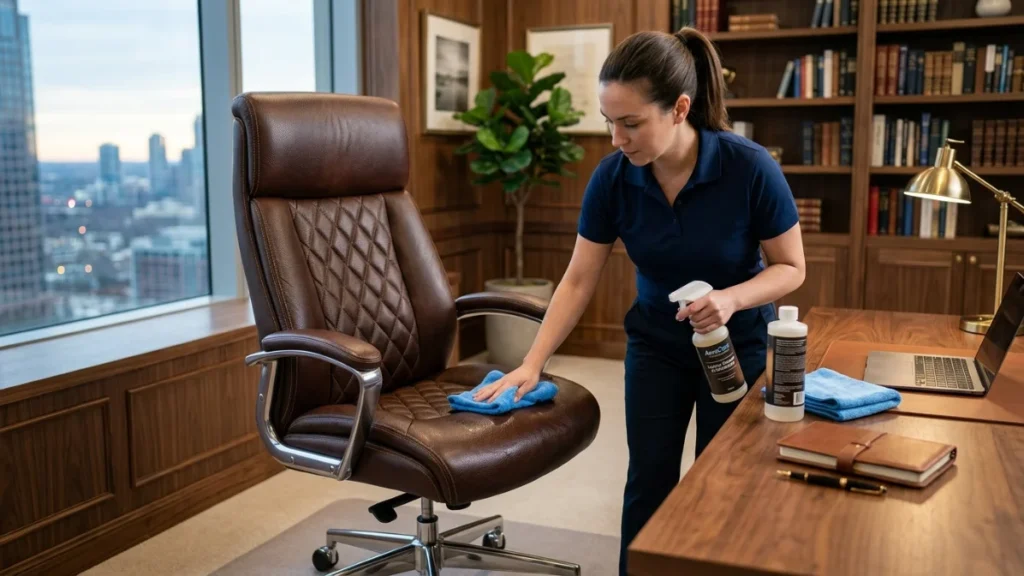
Leather chairs look sleek and professional, but they need a bit more care than fabric. The wrong cleaner can crack or discolour the leather permanently. Here’s how to clean leather office chair surfaces safely:
Steps To Follow:
- Wipe down the entire chair with a dry microfibre cloth to remove dust.
- Mix equal parts white vinegar and water, and lightly dampen a cloth with the solution.
- Gently wipe down all leather surfaces in circular motions.
- Follow up with a dry cloth to remove any moisture.
- Apply a leather conditioner once every few months to prevent cracking and keep the surface supple.
Avoid using baby wipes or alcohol-based cleaners on genuine leather; they strip the natural oils and cause the material to dry out quickly.
How to Disinfect Office Chair Properly
Cleaning removes visible dirt, but disinfecting goes a step further by killing bacteria and viruses. This is especially important if multiple people share the same chair, or if someone in the office has been unwell. Knowing how to disinfect office chair surfaces correctly is a must for any hygienic workspace.
| Surface Type | Recommended Disinfectant | Method |
| Fabric | Diluted white vinegar spray | Lightly mist and allow to air dry |
| Mesh | Isopropyl alcohol (70%) | Dab with cloth, don’t saturate |
| Leather | Leather-safe disinfectant wipes | Wipe gently, follow with conditioner |
| Armrests & Base | Multi-surface disinfectant spray | Wipe with cloth, rinse if needed |
Always check the chair’s care label before using any product. Most chairs have a tag under the seat with cleaning codes W means water-based cleaners are safe, S means solvent only, and X means vacuum only.
How to Deodorize Office Chair Getting Rid of Odours for Good
Even a visually clean chair can carry unpleasant smells from sweat, food, or general use. Learning how to deodorize office chair surfaces is a simple process that most people overlook. Baking soda is your best mate here.
Quick deodorizing method:
- Lightly sprinkle baking soda over the fabric or cushioned areas.
- Leave it to sit for 15–20 minutes (longer for stronger odours).
- Vacuum the baking soda away thoroughly.
- If the smell persists, lightly mist the chair with a diluted white vinegar and water solution and allow it to fully air dry.
For ongoing freshness, open office windows regularly and avoid eating directly over your chair. A little prevention goes a long way.
Cleaning the Chair Base, Wheels & Armrests
Most people forget about the non-upholstered parts and they’re often the dirtiest. Chair wheels (castors) collect an alarming amount of hair, dust, and grime, which can also affect how smoothly the chair rolls.
For wheels and castors:
- Use a flathead screwdriver or toothpick to remove tangled hair and fibres.
- Wipe down with a damp cloth and mild detergent.
- For a deeper clean, pop the castors off if possible and rinse under warm water.
For armrests and the chair base:
- Wipe down plastic or metal surfaces with a multi-surface cleaner and a microfibre cloth.
- For stubborn marks, a small amount of rubbing alcohol works well on hard surfaces.
- Dry thoroughly before use to prevent any residue build-up.
How Often Should You Clean Your Office Chair?
There’s no single right answer. It depends on how much you use your chair and your office environment. But here’s a general guide to help you stay on top of it:
| Cleaning Task | Recommended Frequency |
| Vacuuming fabric/mesh surfaces | Weekly |
| Spot cleaning stains | As needed (immediately is best) |
| Full wipe-down (leather or mesh) | Fortnightly |
| Deep cleaning (all materials) | Every 3–6 months |
| Disinfecting high-touch areas | Monthly or after illness |
| Deodorizing with baking soda | Monthly or when odour is noticeable |
| Cleaning wheels and castors | Every 2–3 months |
Sticking to a simple routine keeps the job manageable and means you never have to deal with seriously built-up grime.
Common Mistakes to Avoid When Cleaning Your Office Chair
Even with the best intentions, a few common mistakes can do more harm than good. Here’s what to steer clear of:
- Using too much water: Over-wetting fabric or mesh can cause mould and mildew to form under the cushion.
- Rubbing stains instead of blotting: Rubbing spreads the stain further into the fibres.
- Using bleach on any upholstery: It can permanently discolour fabric and damage leather.
- Skipping the drying step: Sitting on a damp chair encourages bacteria growth and can leave watermarks.
- Using the same cloth for different surfaces: Cross-contamination can spread bacteria from one area to another.
Conclusion
Regular at-home care will keep your office chair in great shape for day-to-day use. But every now and then, a thorough professional clean makes a real difference especially in busy office environments where chairs take a beating.
That’s where Beaurex Cleaning comes in. As a trusted, locally owned Melbourne cleaning company, Beaurex specialises in keeping workplaces spotless from top to bottom. If your office chairs or your entire workspace need more than a quick wipe-down, their Office Cleaning services in Melbourne cover everything from desk surfaces to upholstery, ensuring a hygienic and professional environment for your team.
For those times when things have really built up, Beaurex also offers Deep Cleaning in Melbourne, a comprehensive service that gets into every corner, fabric surface, and overlooked spot in your office. Because a clean workspace isn’t just about appearances it’s about the health, productivity, and wellbeing of everyone in it.
FAQs
1. How Often Should You Clean an Office Chair?
A quick clean every week keeps dust and grime from building up. A deeper clean every few months helps keep your chair in top nick.
2. What Is the Best Way to Clean an Office Chair?
It depends on the material, but start with vacuuming or dusting first, then use the right cleaner for fabric, mesh, or leather. Using the proper method helps avoid damage.
3. How Do You Clean a Fabric Office Chair Properly?
Vacuum the chair first, then spot clean with mild soapy water using a microfibre cloth. Blot stains gently rather than scrubbing too hard.
4. How Do You Clean a Mesh Office Chair?
Use a vacuum with a brush attachment to lift dust, then gently scrub with warm water and mild soap. Mesh needs a light touch so the fibres don’t wear out.
5. How Do You Clean a Leather Office Chair Safely?
Wipe it down with a damp cloth and use a leather-safe cleaner when needed. A leather conditioner every now and then helps stop cracking.
6. Can You Use Vinegar to Clean an Office Chair?
Yes, diluted white vinegar can work well for light cleaning and deodorising. Just be cautious using it on delicate materials like genuine leather.